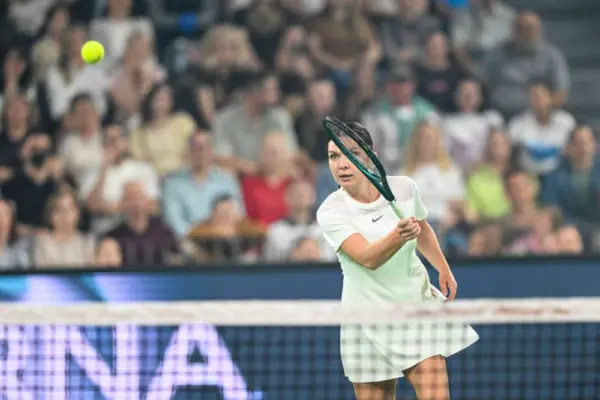
Simona Halep’s meteoric rise to tennis royalty ended in a devastating fall from grace that has left the sport reeling. Once World No.1 and a two-time Grand Slam champion, Halep’s career trajectory was shattered by a doping suspension that effectively ended her time at the top.
In 2019, Halep was at the pinnacle of her powers, delivering a flawless Wimbledon final performance by defeating Serena Williams while conceding only four games. This victory crowned a spectacular journey that began with her first Grand Slam triumph at Roland Garros in 2018, after years of near misses in major finals. Halep’s game was defined by relentless consistency, exceptional movement, and a versatile arsenal that allowed her to dominate on all surfaces. Between 2008 and 2017, she steadily ascended through the rankings, breaking into the elite and spending 64 weeks as the world’s best player.
Her breakthrough years were marked by relentless effort and adaptability, with a standout 2013 season where she captured six titles on every surface imaginable, earning the WTA’s Most Improved Player award. By 2017, Halep had cemented her status as a tennis powerhouse, winning multiple WTA 1000 titles and reaching Grand Slam finals, though heartbreak lingered. The breakthrough came in Paris in 2018, where she finally claimed her maiden Grand Slam title after an epic comeback against Sloane Stephens. She went on to dominate Wimbledon in 2019, producing what many consider one of the finest tennis performances in the sport’s history.
However, the tide turned dramatically. Despite maintaining top form through 2020, Halep’s career was soon disrupted by a series of injuries in 2021, including shoulder, calf, and knee issues that saw her drop out of the top 10 for the first time since 2012. She rebounded to win the Canadian Open in 2022 for the third time, hinting that she still had much to offer. But her fortunes took a catastrophic hit when she tested positive for the banned substance roxadustat at the 2022 US Open.
The announcement shocked the tennis world. Halep vehemently denied any intentional doping, attributing the positive test to a contaminated supplement. Yet the International Tennis Integrity Authority (ITIA) imposed a four-year ban, backdated to October 2022, threatening to end her career prematurely. The suspension was later reduced to nine months by the Court of Arbitration for Sport in March 2024, which accepted that the violation was unintentional and linked to contamination. Halep returned to competition at the Miami Open but struggled to regain her previous form amid ongoing injury problems.
Her comeback was short-lived. Withdrawals and early exits culminated in a sudden and surprising retirement announcement at the 2025 Transylvania Open. Halep, now 35, conceded she would never recapture the heights of her prime.
Halep’s career is a complex narrative of extraordinary triumph and painful downfall. Her record boasts 24 WTA titles, nine WTA 1000 crowns, two Grand Slams, and extended periods as World No.1, achievements that place her among the sport’s elite. Yet her legacy is indelibly marred by the doping scandal, overshadowing the resilience and excellence she displayed over more than a decade.
Reflecting on her journey, Halep’s story is a stark reminder of the fragility of sporting greatness. Despite a career tarnished in its final chapter, she remains a figure who fought tirelessly to win the biggest titles and never shied away from adversity. As she herself faced the end of her career, her unwavering commitment to the sport stands as a testament to her enduring spirit.