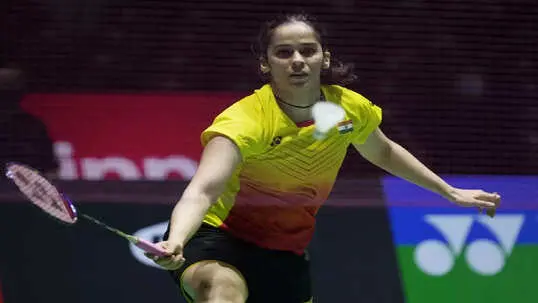
Saina Nehwal believes Indian badminton has transformed into a genuine global powerhouse over the past two decades, but the country’s first Olympic medallist in the sport has also sounded a blunt warning: the next generation must begin winning consistently before badminton risks slipping from public consciousness.
In an exclusive interview with Sports Now, Nehwal reflected on the revolution triggered by her historic rise, the emergence of PV Sindhu and India’s growing ‘army’ of young talent, while identifying the uncomfortable reality that has troubled the sport over the last five to six years.
When Nehwal won the Philippines Open as a 16-year-old in 2006, defeating then world No. 4 Xu Huaiwen en route to the final before winning against Pei Xian Julia Wong of Malaysia in the summit clash, the victory did more than announce the arrival of a prodigious talent. It shattered the aura of invincibility surrounding the world’s leading players and showed an entire generation of Indians that the sport’s established powers could be beaten. Asked whether the success that followed represented the creation of a genuine system or was primarily driven by two generational exceptions in herself and Sindhu, Nehwal traced Indian badminton’s extraordinary journey from belief to global relevance.
“I think 20 years has been a long journey, and when I recall, it’s like, ‘Oh my god.’ The years have gone by so fast. But in a way, when I look back, I didn’t have a big team to help me out. It was just Gopi sir (Pullela Gopichand), believing in us and in our ability to do well at the highest level. And at that point in time, we didn’t know we would need a trainer, a physio, a conditioning coach, a mental trainer, or a psychologist. So many things are required to be the best or to stay at the top for a long time,” Nehwal remembered.
“Gopi sir helped me out, and my mom believed in me and that I could be the best in the world. So, I think these two pillars were really supportive throughout so many years. And I didn’t know that after winning the first Olympic medal in 2012, things would change so beautifully for badminton in India that we would have Sindhu, Kidambi Srikanth, and many top players performing at the highest level,” she said.
“And from 2012, winning so many titles back-to-back, I think till 2021, we were just winning back-to-back, in so many Super Series, Olympics, World Championship medals. It opened up so well for Indian badminton that it’s now the second most-loved sport, and when I won the first Philippines Open in 2006, defeating the world number four, I was like, ‘Oh my god, it is actually possible to defeat top players.’ And they are not machines. I used to feel that all these Chinese players were everywhere. In fact, the German girl whom I defeated was world number four and also a Chinese player. So I was like, ‘How is it going to be possible to defeat them?’ And they come up with that army every second or third year,” the former World No 1 said.
“They have six or seven in the top 10 or top 20, and they have always been doing that. But now, after 20 years, even I can say that Indian badminton has become like a powerhouse. Now we also have an army who are doing well, and especially among the girls, we are performing extremely well, with Tanvi winning one title, Sindhu winning one title, and Ashmita winning one title; Unnati is also doing extremely well. In men’s, we have Lakshya and Ayush Shetty, who are doing very well, but overall, over the last 20 years, the team has performed fantastically,” Nehwal added.
Yet greater infrastructure, deeper talent and improved support systems have not produced the sustained stream of finalists India might have expected. Nehwal acknowledged that while young players such as Tanvi Sharma, Anmol Kharb, Unnati Hooda and Ayush Shetty have created excitement-and Treesa Jolly and Gayatri Gopichand have delivered on the biggest stage-the absence of consistent results remains Indian badminton’s most pressing concern. Her assessment was direct: without regular success, public attention, sponsorship and investment can quickly disappear.
“Consistency – we are still missing it. I think women’s singles, men’s singles, all the categories – I think we need to show consistent results, and that’s also one sad reality in Indian sports: if you don’t win consistently, I think people somewhere forget ki doosre sport mein kuch chal raha hai ya kaisa chal raha hai (What is happening in other sports). So, consistency is very important in different sports to be in the news and in the media, and also so people get to know that badminton has been doing extremely well for the last so many years, and they’re continuing to do that,” the 36-year-old believed.
“That attracts a lot more sponsorships, a lot more support for the academies or young players who are coming up. But if we are not winning consistently, then obviously, people come and ask, ‘kya ho raha hai? What is going to happen in the next Asian Games or Olympics or…’ Once in four years you get these big tournaments, and obviously you have a lot of pressure, a lot of tension. But we also have so many Super Series in a year, almost 16-17 Super Series. I think it’s very important to win consistently so that we have someone who is keeping badminton up there,” the reckoned.
“I think we have been losing at that for the last 5-6 years, but Sindhu is anyway there, but we need someone who is also, like, really young, perhaps 16-17 years. Someone should be in the women’s or men’s category now to consistently show results. Really happy to see Gayatri and Treesa win the World Championship medal, but I think we still need more consistent results from many of these badminton players so we can have many more academies coming up. Because somewhere I see Hyderabad and Bangalore have many courts, but still in India, kahi na kahi(somewhere) we are lacking in that. We don’t have many badminton coaches and trainers yet,” she highlighted.
carried both pride and urgency. Indian players no longer enter major tournaments believing the world’s best are unbeatable-a psychological barrier her generation helped destroy. But becoming a powerhouse and remaining one are different challenges. For the revolution to endure, India must discover its next teenage standard-bearer, strengthen its coaching and support ecosystem beyond a few established centres, and convert scattered breakthroughs into sustained international dominance.