Maharashtra’s new anti-conversion law will come into effect from August 28, bringing stricter legal provisions against religious conversions alleged to involve force, fraud, coercion, inducement, misrepresentation or undue influence.
The legislation has already triggered concerns among civil rights groups and Christian organisations, with critics arguing that some of its provisions could bring personal decisions on faith and marriage under greater state scrutiny.
What is Maharashtra’s anti-conversion law?
The Maharashtra Freedom of Religion Act, 2026 is aimed at preventing unlawful religious conversions. The law covers conversions allegedly carried out through force, coercion, fraud, misrepresentation, inducement or undue influence, and also contains provisions dealing with conversions linked to marriage or a promise of marriage.
One of its key requirements is that a person intending to convert must give 60 days’ prior notice to the District Magistrate. The person or organisation facilitating the conversion is also required to follow the prescribed procedure. The law provides for objections, police inquiry and declarations after conversion.
The Act gives a broad definition of “allurement”. It includes gifts or material benefits, employment, free education in a religious institution, a promise to marry, a better lifestyle and divine healing. It also covers portraying the practices of one religion negatively compared with another or glorifying one religion over another.
The legislation provides for imprisonment for unlawful conversion, with stricter punishment in cases involving minors, women, members of Scheduled Castes or Scheduled Tribes and people of unsound mind. Repeat offences can attract higher punishment, while offences under the Act are cognisable and non-bailable.
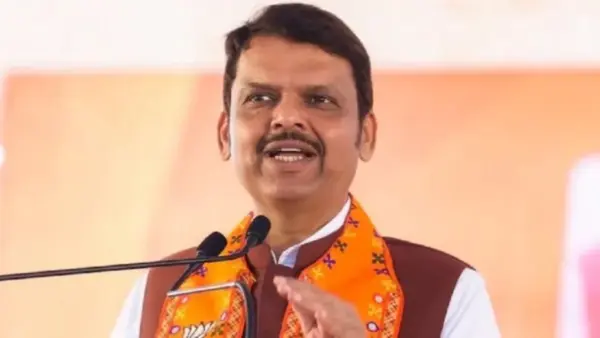
The Maharashtra government has maintained that the legislation is intended to deal with forced and fraudulent conversions, and is not meant to prevent voluntary changes of religion. Maharashtra Chief Minister Devendra Fadnavis has also said the law is not aimed at voluntary conversions or interfaith marriages.
The state government has notified August 28, 2026, as the date on which the Act will come into force.
What are critics saying about the law?
The legislation has faced opposition from lawyers, activists and representatives of civil society and religious organisations.
At a press conference at the Mumbai Marathi Patrakar Sangh on August 24, speakers including Tushar Gandhi, Fr Frazer Mascarenhas, advocate Lara Jessani, advocate Irfan Engineer and activist Sandhya Gokhale raised concerns over the Act.
A common argument among the speakers was that the government had not placed sufficient data in the public domain to establish that forced religious conversions were widespread in Maharashtra. They also questioned why existing criminal laws were not sufficient to deal with forced or fraudulent conversions.
Advocate Lara Jessani of the People’s Union for Civil Liberties questioned the need for the new legislation, saying there was no commission or data demonstrating that religious conversion was rampant in Maharashtra.
She particularly raised concerns over the broad definition of “allurement”, which includes benefits such as education, employment, a promise to marry and a better lifestyle.
Jessani argued that the law could result in greater state scrutiny of personal decisions involving faith and marriage. She also said interfaith couples already face harassment and argued that Dalits and Adivasis should remain free to change their religion, including to escape caste oppression.
Fr Frazer Mascarenhas, former principal of St Xavier’s College, questioned whether services such as education could potentially be interpreted as an inducement under the new law.
“How can a good education be considered as an inducement to convert?” he asked, referring to educational services provided to students from different communities.
Mascarenhas also questioned the law’s approach to the burden of proof, arguing that a person could face an allegation and then be required to establish that the alleged wrongdoing did not take place.
Advocate Irfan Engineer argued that existing laws are already capable of dealing with forced, fraudulent and coercive conversions.
He described the new legislation as “not a pro-people law but a political one” and alleged that its provisions could disproportionately affect Muslims and Christians.
Activist Tushar Gandhi criticised the legislation as another step towards what he described as a “Manuvadi Hindu Rashtra”.
He alleged that the law could intimidate marginalised communities and NGOs, saying, “Lokshahi se thokshahi ki taraf jaa rahe hain”, or that the country was moving from democracy towards authoritarianism.
Activist Sandhya Gokhale questioned provisions relating to the religion of children and alleged that the legislation could give the government greater control over women’s personal choices.
The NGO coalition represented at the press conference also claimed that women, young adults, Dalits, Adivasis and religious minorities could be disproportionately affected.
Why are Mumbai churches making worshippers sign self-declaration forms?
Against this backdrop, Christian prayer groups across the Mumbai Metropolitan Region have started asking worshippers to sign self-declaration forms before attending prayer meetings.
The forms are being used in areas including Vasai, Virar, Mira-Bhayandar, Palghar and Thane. Worshippers are asked to declare that they are attending the prayer meeting voluntarily and of their own choice, without any “pressure, inducement, temptation, lure or threat”.
The declaration also states that the person’s decision to attend church is “completely personal, voluntary and independent”.
In some cases, worshippers are being asked to attach a passport-size photograph and provide identification details such as Aadhaar or PAN numbers.
The practice is new for many congregations. Until recently, people could generally walk into prayer meetings without having to submit documentation declaring why they were attending.
Church organisers describe the forms as a precaution and a form of protection amid a series of disruptions at Christian prayer meetings in the Mumbai region.
According to reports, several prayer meetings have been disrupted in recent months after people identifying themselves as Bajrang Dal or VHP members allegedly entered gatherings and accused organisers of carrying out religious conversions. Police were called in some cases and FIRs were subsequently registered.
Pastors say they fear such incidents could increase once the new law comes into force.
At New Hope Church in Virar, Pastor Steven Rozario told worshippers that the declarations would be kept so that the church could produce them if anyone later alleged that people had been forced or compelled to attend the prayer meetings.
The Maharashtra Christian Development Association has similarly described the forms as a security measure. State president Devdan Tribhuvan said the declarations were introduced after worshippers began facing questioning and disruptions at prayer meetings.
The forms are reportedly being circulated in English, Marathi and Hindi.
Some churches have also stepped up security measures, including installing CCTV cameras and photographing gatherings, amid concerns over disruptions.