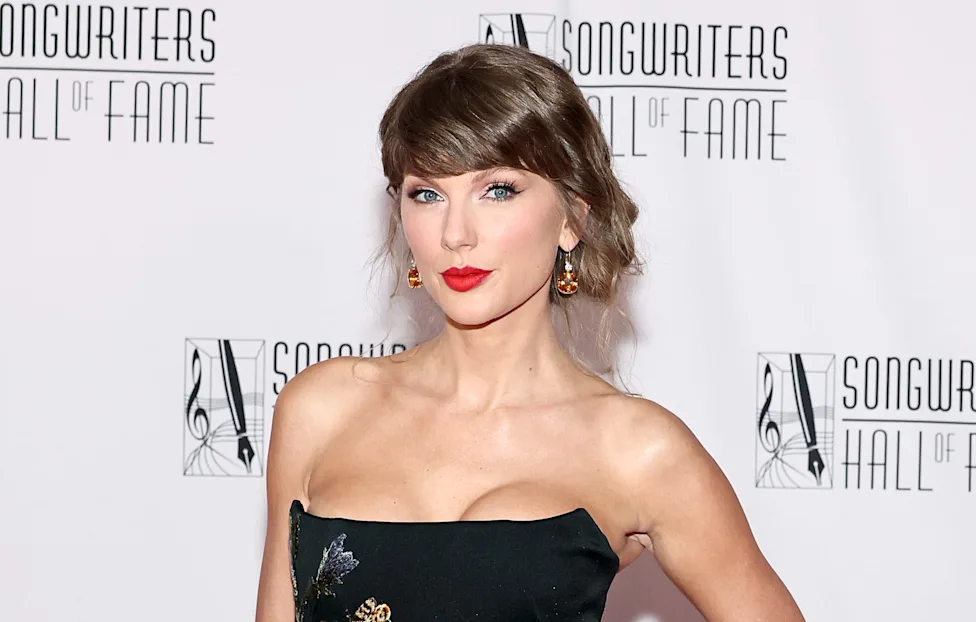
remembers the past 20 years of songwriting “All Too Well.”
The Recording Academy released a video on Aug. 24 of “The Icon Sessions with : A 20-Year Retrospective,” an intimate conversation hosted on Aug. 18 by its Songwriters & Composers Wing.
Sitting beside Recording Academy CEO Harvey Mason Jr. at the Grammy Museum in Los Angeles, Swift traced a career that began with a 10-year-old studying song structure and dreaming of playing Nashville’s .
Wearing an olive green dress with a maroon flower embellishment along one strap, Swift spent nearly 50 minutes breaking down how she writes, why details matter, and how criticism can fuel creativity. She ended the video behind the same flower-covered acoustic piano she took around the world on the , performing a mashup of “I Knew It, I Knew You,” “August” and “All Too Well.”
From Nashville to now
Swift said she was about 10 when she began “obsessively thinking about and planning” how she could spend her life making music. After hearing Faith Hill was discovered at the Bluebird Cafe, Swift made performing there a personal goal and began studying the “structures and architecture” of songs she loved.
“I figured maybe if I write enough of these, I might get decent at it,” Swift said.
Nearly 20 years after her debut album, she can see the foundations of her songwriting in “Tim McGraw.”
“I never turned to music to forget my human experience,” Swift said. “I turn to music to remember it.”
That early songwriting also taught her to trust her perspective. Swift recalled label executives questioning whether country radio’s core demographic — which she said was considered a 35-year-old woman — would connect with a 16-year-old singing about high school.
“This is why this all worked,” Swift said. “It was because I didn’t listen to the people who said that I didn’t have a valid perspective on life because I didn’t fit into a certain demographic.”
“We’re dealing in emotional truths that either resonate or don’t,” she added.
When criticism becomes fuel
Mason asked how Swift keeps intense public scrutiny from blocking her creativity.
Sometimes, she said, it does the opposite.
“Sometimes when people are mocking me, it’s really fun to mock them back,” Swift said. “Sometimes I like to just use words that they have to look up in order to talk s*** about.”
Swift pointed to her sixth studio album ,written during a period when she felt people were actively trying to misunderstand her. The experience gave her lyrics what she called a “gnarled” bite.
Her response included “Look What You Made Me Do,” a deliberately tongue-in-cheek take on feeling cornered. But underneath the album’s harder exterior was a story about retreating from mass scrutiny and finding “a tiny bit of warmth” that could sustain her.
“When I’ve gone through something that was sort of an attempt to drive me insane, when you don’t allow that to happen and you use art and music as a way to barrel roll out of that, those are the moments I’m the most proud of,” she said.
The ‘idea fairy’
Swift said she doesn’t write a song every day. However, she regularly records fragments that could eventually become one.
Her phone contains a seemingly endless note filled with twists on familiar phrases. If a melody strikes, she records that immediately, too.
“You think you will remember it. You will not,” she said.
Those fragments can later fall into place during a writing session, comparing songwriting to assembling a puzzle while simultaneously creating its pieces.
“That’s the magic of it and the misery of it as well,” she said.
One creative lesson came from Max Martin and Shellback. Swift brought the producers what she described as a “really sad piano ballad” called “I Knew You Were Trouble” and suggested it have no drums.
Their suggestion: dubstep.
“I was like, ‘Oh no. I don’t know, guys,'” Swift recalled. “It ended up being the best thing for it.”
She left the room of songwriters with a few lessons: Show up even when the “idea fairy” doesn’t. Don’t shoot down other people’s ideas without bringing your own. Practice the “yes, and…” philosophy to brainstorm.
‘Defiant reclamation’
Swift also discussed rerecording the albums she made under her former record deal, comparing the initial prospect to having to redo an assignment because the dog actually ate the homework.
Eventually, her perspective shifted.
“I got to a place where it felt like defiant reclamation of what was always mine to begin with,” she said.
The process allowed her to revisit songs left off the original albums, including “Nothing New,” which she wrote at 22 and later recorded with Phoebe Bridgers.
The song explores fears of aging out of the music industry. Swift joked that at 22, those fears could have amounted to “a sad night with a bottle of wine.”
Revisiting the song around age 30 was another story.
“I was like, ‘Oh no, this hits. This hits.'”
As the conversation closed, Swift sat behind her Eras Tour acoustic piano, weaving together a mashup of “I Knew It, I Knew You,” “August” and “All Too Well.”