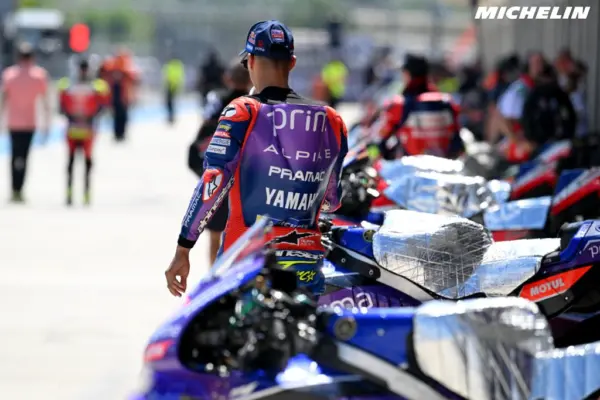
Toprak Razgatlioglu’s debut has turned into a harsh reality check, sparking serious concerns about Yamaha’s strategic management of the triple World Superbike champion.
After twelve rounds of the 2026 season, Razgatlioglu languishes in 21st place with a mere 14 points, trailing behind three fellow Yamaha riders and struggling to adapt to the premier class. Veteran manager Carlo Pernat has delivered a scathing verdict: Yamaha’s decision to fast-track Razgatlioglu into this year, rather than waiting for the technical overhaul and Pirelli’s arrival in 2027, risks losing one of the sport’s brightest talents.
Pernat’s critique centers on Yamaha’s timing. Speaking to La Gazzetta dello Sport, he stated bluntly, “The management of Razgatlioglu’s situation is flawed. We risk losing him.” He argued that keeping Razgatlioglu in WorldSBK for one more season would have been far wiser. “If he had stayed in Superbike for another year, he would have transitioned to MotoGP alongside Pirelli, a tyre brand he knows intimately. Wouldn’t that have been better?” This perspective highlights the looming 2027 MotoGP revolution: a radical technical reset slashing engine capacity from 1000cc to 850cc, reducing aerodynamics, scrapping several electronic aids, and, crucially, switching tyre suppliers from Michelin to Pirelli.
The current Michelin tyres have become a symbol of Razgatlioglu’s struggles. His unique riding style, honed on Pirelli rubber in WorldSBK-especially his braking and corner entry techniques-is not translating well to Michelin’s characteristics. Pernat warns this mismatch could do lasting damage to the rider’s confidence. “Every race weekend, he watches others from behind, wondering if he’s still capable of racing,” Pernat said, underscoring the psychological toll of poor results on a rider with three WorldSBK titles.
Yamaha’s decision forces Razgatlioglu to endure a painful learning curve on an uncompetitive machine using tyres that don’t suit his style, all while preparing for a technical landscape that will soon render current experience obsolete. Pernat envisions a three-year path: 2026 in WorldSBK, then 2027 and 2028 adapting to the new rules and Pirelli tyres. This gradual approach could have preserved Razgatlioglu’s confidence and maximized his potential.
However, Pernat acknowledges that staying in WorldSBK with Yamaha might not have offered a competitive advantage either, given the manufacturer’s current struggles in that championship. Yet, the 2026 campaign could still serve as a valuable apprenticeship, familiarizing Razgatlioglu with circuits, procedures, prototype bikes, and the Pramac team environment. This groundwork might pay off when Pirelli tyres arrive next year, allowing him to leverage his prior experience.
Despite these potential benefits, the stark reality remains: twelve races, 14 points, and a 21st-place standing fall far short of expectations for a rider heralded as a future star. Should Razgatlioglu fail to maintain confidence through this brutal initiation, Yamaha’s gamble could backfire spectacularly, ultimately costing them a cornerstone of their future.
In Pernat’s words, “By bringing Toprak into MotoGP a year too early, Yamaha may have weakened their rider just when they intended to build their future around him.” This blunt warning casts a long shadow over Yamaha’s talent management strategy as Razgatlioglu faces an uphill battle to reclaim his status in the premier class.