Prada was called out over its take on Kolhapuri chappals, while Ralph Lauren faced criticism over designs that drew comparisons to Indian jhumkas. And every now and then, Western fashion labels find themselves under the spotlight for borrowing from India without clearly acknowledging the source of their inspiration. Now, US-based label JW PEI has joined that growing conversation after the way it described a saree-inspired creation sparked backlash online.
Draped gown or desi saree?
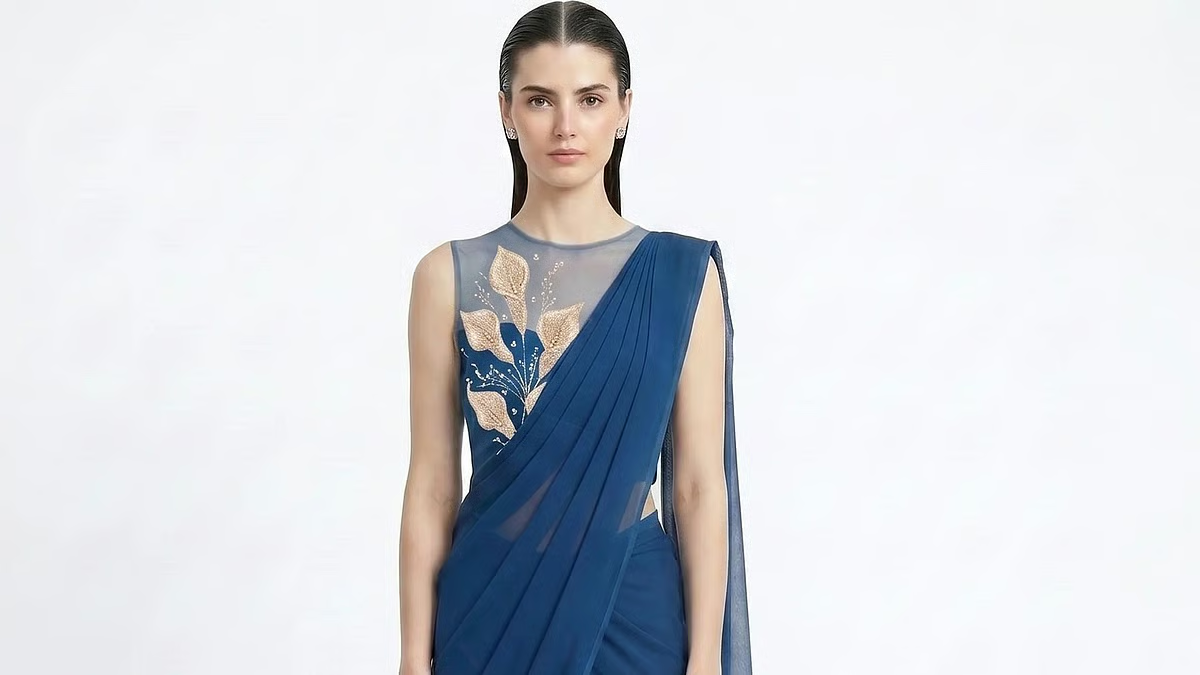
The controversy began after screenshots of JW PEI’s product listing started circulating across social media platforms. The ensemble, a navy blue pre-draped saree-style silhouette with a floral embroidered blouse, was originally listed as the “Botanical Embellished Draped Overlay Maxi Dress.”
Priced at €198 (approximately ₹22,000), the outfit featured the familiar elements of a saree, including a draped pallu and pleated construction. However, the product description avoided the word “saree” altogether, instead categorising it as a dress.
The product description soon drew criticism from Indian social media users, who questioned the lack of clear cultural acknowledgement. While the brand’s interpretation of the saree itself was not the main issue, the debate focused on why a distinctly saree-inspired design was marketed as a “draped overlay maxi dress” without directly identifying its Indian roots.

JW PEI updated the name | Website
JW PEI changes the name
Following the online backlash, the brand updated the product listing. The outfit is now titled “Botanical Embellished Saree-Inspired Gown – Navy.” The revised description also directly acknowledges the garment’s roots, stating that the design is “Inspired by the traditional South Asian saree.”
The brand further explains that the floor-length silhouette reworks the saree’s signature draping, including softly gathered pleats at the waist and a sheer pallu falling from the shoulder. Gold-tone botanical embroidery adds detailing to the otherwise understated navy look.