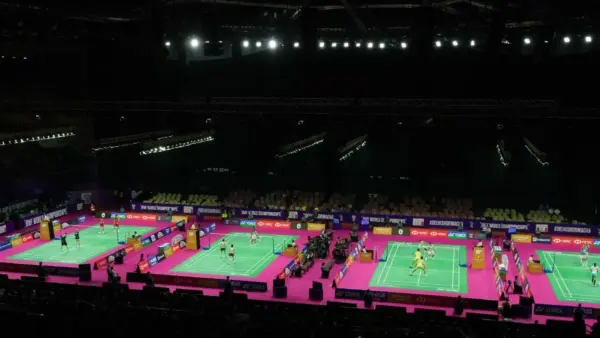
The BWF World Championships 2026 has provided the backdrop for several important conversations around the future of badminton, from the introduction of the 15-point scoring system to the growing Indian market and the sport’s increasing dependence on technology.
With the new scoring format set to be introduced from January 2027, BWF Secretary General Thomas Lund spoke to the media on the sidelines of the World Championships at the Indira Gandhi Indoor Stadium in New Delhi. Lund explained the rationale behind the change, addressed concerns about how players will adapt and outlined how the governing body is looking at player welfare beyond simply reducing the number of points in a game.
He also spoke about India’s importance to global badminton, the BWF’s plans for new technology and an OTT platform, prize money at the World Championships, shuttlecock availability and the concerns surrounding the scheduling of the India Open in Delhi during the winter months when air pollution can be an issue.
Q: What is the thinking behind introducing the 15-point scoring system from January 2027?
Thomas Lund: That’s obviously something that has been under long and thorough discussion with all our community stakeholders and so on.
I could bring up a lot of different elements where there is an advantage during what we have now decided to do for next year, but I would highlight one of them, which actually comes from feedback we have received from players for quite a number of years.
The players are becoming better and better. They play fantastic badminton. You see the length and tightness of the matches, and the broadness and depth in the world rankings means more and more players are playing super good badminton.
So, actually, it is full on from the first round, even for the best players. That means the physical component, the pressure and the load on the players becomes bigger and bigger.
We obviously want to help players do what they do best, which is play badminton every week or as much as they can, but at the same time not get injuries. That’s really the balance we’re trying to strike here by bringing the load slightly down.
It’s not a revolution. It’s an evolution of the scoring system. When we changed from the old 15-point system, where you needed to have the serve to win a point, to the current system, matches became much shorter. Now they have become considerably longer, so we’re tweaking the point system again where the load on players will come down.
We want to safeguard the players and their health in a better way.
Q: What are the possible disadvantages of moving to 15 points?
Thomas Lund: Any decision we take and any analysis we make will have people who think differently and have a different perception. We’re changing six points per game in a format that has become longer and longer over the years. I get it. This is a change for players. They are so good. They are fantastic. I admire their abilities, and they’ll adapt to this in a split second.
I know they’ll say, “Oh, it’s hard” and so on, but they are so good that I’m convinced they’ll adapt quickly.
Coaches are a little bit worried because it has changed to something new, and I get it. I don’t see big disadvantages other than there will be an adaptation period and some worries about a slight change in balance.
But our statistical analysis suggests that the same champions and the same people will continue to win. Maybe there will be a slight twist towards more close matches, and I think that’s an advantage for badminton.
I’m not sure it’s an advantage for everyone who may win or lose, but that’s not why we’re here. We’re here to evolve badminton for the benefit of the players at the end of the day.
Q: Could the 15-point system still produce matches that last an hour or more?
Thomas Lund: I don’t have a crystal ball, but we have made tests and, of course, there will be players playing an hour with the 15-point system.
Today, we have players playing 21-point matches that last half an hour, while some go beyond 100 minutes. We have to work a little bit with statistical averages because draws will come out with different opponents. Sometimes players will have an easy run and sometimes they’ll have a bad draw from the first round, meeting one super-good player after another and playing for hours and hours.
But that’s the nature of any sport. What we have to look at is that this is not likely to happen every tournament over a year. Therefore, the average load is coming down through adjustments to the scoring system, scheduling and the number of days.
Q: Is the scoring change part of a broader player welfare strategy?
Thomas Lund: Absolutely. The scoring system is one of the tools we’ve taken into the toolbox that affects all levels.
The result over a year or two could be that matches become longer again, maybe even close to the time we have today. Then we’ll need to look at it again. But right now, it is a tool where the load will go down on each individual match a little bit. That will help with recovery.
We can then create schedules with the same number of matches over the days while hopefully avoiding very late finishes. We’ve already done a lot to make sure tournaments don’t end at two o’clock in the morning.
We can hopefully have slightly earlier finishes and slightly longer recovery times. These are all questions around player health.
When the best players come together at a Super 1000 or a major event like this one, the load is obviously harder. That’s why we have also decided to use more days at those tournaments, which creates rest days in between.
It’s a little bit like an Olympic event, which is also a pinnacle together with our major events.
Q: Is BWF looking at electronic line calling and other new technologies?
Thomas Lund: We have a lot of technology projects in the pipeline and have had them for quite a while. There is very hard work being done on these things.
I’m not quite ready today to announce all of them, but I can confirm that we have lots of interesting new developments, both for the game and spectators, but also particularly for players in terms of how we play the game. Those technologies can help umpires and players with calls and so on.
I’m not ready to open up all the details because we’re still working on quite a few things, including exactly when we can implement them. But I can confirm that we will have new technology being implemented from January 1 (2027). I’ll come back with the details on exactly how that will look.
Q: How important is the Indian market for BWF?
Thomas Lund: It’s not a coincidence that we’re here with one of our biggest events on the calendar in India. India has both top players and top-level performances. You’ve had individual stars, but we’ve also seen the depth and breadth of what India has been doing at the highest performance level.
Our statistics show that India is probably, if not the fastest-growing badminton market, one of the fastest-growing markets, and it has one of the biggest populations in the world. It’s super interesting that we are able to offer a sport to communities, young people and players to play the game.
I hope we have a slight distance to the cricket religion that you have in this country, but we’re getting there and that’s our objective. We have to aim high.
We are thrilled to be here in India because badminton resonates with the population, with the culture, with the climate and everything else.
Q: How is BWF helping badminton’s growth in India?
Thomas Lund: The development of participation is obviously being driven by many good stakeholders here in India. The passion of the badminton community, the Badminton Association of India (BAI) and many others is driving that.
We are helping and offering our assistance. We are trying to promote all the different programmes we have, including coach education and Shuttle Time programmes, which can help the local and domestic setup develop badminton even more.
It’s fantastic development that we’ve seen over the years, and we hope that will also start trickling into the biggest tournaments on our tour. India has some of the biggest tournaments on our tour, so it’s really a growth success over quite a long period.
It’s been a lot of hard work from all the stakeholders here in India, so well done.
Q: Has New Delhi lived up to expectations as host of the World Championships?
Thomas Lund: You know what? I can only say that we’ve had a team here for quite a long time working hand in hand with the local organisation, BAI and all the stakeholders around it. I’m super impressed to see what has been established in this venue.
I know there was some criticism earlier in the year, but the amount of things that have been done in a really short time in terms of upgrading the venue, some of which were details and some more significant, has impressed me.
I think Badminton India (BAI), the government and all the stakeholders have been behind this, both with the venue and the operational details they’ve been able to get right for this tournament.
I’ve only heard really positive feedback from players who were here earlier in the year and had different concerns. We are very satisfied with where we are today.
And frankly, we’ve had fantastic matches. There have been some nice surprises, and some matches that were expected to be close have turned out to be extremely interesting.
So let’s focus on what happens on the court because the Indian organisation has done really well with everything around the tournament.
Q: Are there plans to introduce prize money at the World Championships?
Thomas Lund: Right now, that’s not on the charts because we are obviously focusing on a long-term plan. We have new concepts coming in, slightly longer tournaments to preserve health and safeguard athletes, major championships and technology that will cost us money to implement.
A lot of what we have been focusing on is broadcast. One of the biggest focuses in our commercial setup is showing more matches and showing more players deeper into tournaments.
You’ll get more Indian matches on TV. You’ll get more matches from German players, US players and Malaysian players. We don’t need to make choices about which ones you get. You’ll actually get more. There is money going into this.
Our thinking is slightly different in terms of how we help players. We could just give you $100 and say, “Great.” But we’d rather create something more sustainable by giving players sustainable livelihoods and supporting their own revenue generation.
We want to establish a framework for players to become successful on court but also commercially, so they can live a happy life in badminton.
Q: So is prize money at the World Championships completely off the table?
Thomas Lund: It’s not that we’re not thinking about it. But focusing on one tournament every year, or three out of four years, is maybe a little narrow-minded. We’ve pushed up prize money considerably on the World Tour. Instead of having one tournament every three or four years with prize money, we’ve pushed up World Tour prize money almost every week.
We don’t necessarily think the solution is simply, “Here’s $100.” We’d rather create investment into frameworks that help players generate revenue, including through their member federations.
We want all stakeholders involved because someone needs to pay for the practice, the teams and all of that. It’s an ecosystem philosophy where prize money is not always the right solution to support players, even though it seems like an easy solution.
Q: Is the 15-point system also a way of making badminton more attractive amid the growth of sports like padel and pickleball?
Thomas Lund: Not really. Lots of sports around us are doing fantastic things. There are emerging sports coming up, some small in commercial terms and some growing their participation base.
We have very much focused on our own product, our own world and our own stakeholders. We’re focused on what we can do to bring badminton to the next level.
We’re looking upwards and asking how we reach the cricket level in this country, where cricket is probably looking, and how we reach the football level in other countries.
We’re looking more upwards than at somebody who wants to replicate what we’re doing. We’ve learned lots of things from other sports and perhaps other industries, particularly in terms of technology. We look at youth trends and how young people are spending their time.
There are young people playing computer games and engaging in things that aren’t necessarily related to sport. We need to adapt our world and create interest among them as well.
Q: What about BWF’s plans for an OTT platform?
Thomas Lund: I can’t give you the exact details of the business proposition and pricing models, but you’re correct that we announced that we’re working on launching an OTT platform.
You could argue that YouTube is a kind of OTT platform as well, but this would be slightly different. It would allow us to offer content in a different way, a little more controlled by us and probably with better quality in some aspects.
It’s one of the technology projects we’ve been talking about. It will be an offering to all our fans, and I hope they will support it because it will give us the ability to create much more customised products for them than what we’re able to do with the present YouTube platform.
But it’s not like we won’t have a YouTube platform. It will remain a very important channel for us, together with our other social media channels. We are coming out with a new proposition for our fans in the not-too-distant future.
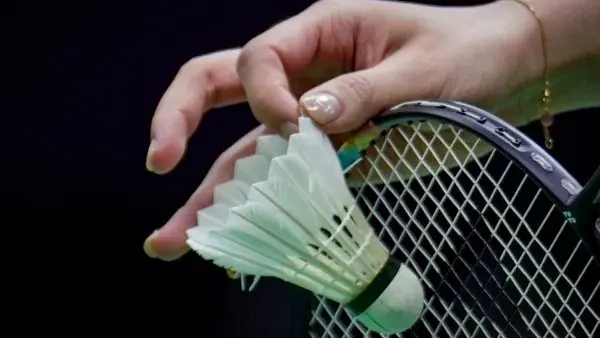
Q: Shuttlecock availability and the possibility of synthetic feather shuttlecocks have become concerns. What is BWF’s position?
Thomas Lund: There’s no problem for the World Championships in terms of shuttlecocks. There are plenty of shuttlecocks, and they’re super-good shuttlecocks that we’re playing with at this tournament and at these top levels.
But you’re correct that over the last 30 or 40 years there have been fluctuations in supply chains and prices. We actually started a conversation around 10 years ago with equipment suppliers because we were looking at the broader participation market. That’s where the biggest socio-economic impact will be for clubs and individuals playing matches.
We started discussing the possibility of creating a new option with synthetic feathers rather than natural feathers.
The feather is only one component of a shuttlecock, so it won’t change the whole thing, but it could potentially stabilise fluctuations in shuttlecock production.
We also started removing barriers within our regulations. Many years ago, we removed the word “feather” so that a synthetic feather replacement could be used.
Manufacturers have worked diligently to see how close they can get to replicating a product that is as good as the ones we normally play with at this level. Some of them are getting quite close, which is super impressive.
We are very supportive of helping manufacturers reach a point where we have both natural feather and synthetic feather options in the market. If it is to be used at a World Championship, obviously it needs to meet very high standards.
Q: There have been concerns from players about the India Open being held in Delhi during January and February, when pollution levels can be high. Is BWF looking at the issue?
Thomas Lund: There are obviously a lot of logistical things when you do these events, and we have been in close dialogue around the calendar. Coming into 2027, there is a relatively short window, and for now it hasn’t been possible to move the India Open completely out of the first quarter.
It is documented that pollution goes down a little further into January and February. There is data that we’ve been looking at, and it will be improved compared with where we were this year. Although, coming here to Delhi now, it’s obviously less.
So you can look at all of these optimums. Right now, it hasn’t been possible due to domestic and local considerations to move it completely around in the calendar, but it’s something we’re looking at.
We have also looked at improving the scheduling, and that will be improved further down the years.
You can see that we’re starting the tour overall slightly later into January, which is also another player health safeguarding measure. It gives players a little longer vacation during Christmas and New Year.
We didn’t think it was ideal for players to come straight out of the World Tour Finals and then have to start the new season in the first week. So there are several considerations behind the calendar, including player health and recovery.
Q: Does that mean the pollution concerns raised by players have been taken into consideration?
Thomas Lund: Absolutely. We are looking at the documented data and the different logistical factors. The scheduling has been improved and will be improved further. But there are domestic and local considerations that mean we cannot simply move everything around immediately.
We are trying to balance all those factors while also looking at player health and safeguarding.
For us, the objective is to give players a longer break around Christmas and New Year and make sure they are not immediately thrown back into competition after the World Tour Finals.
The India Open’s position in the calendar is therefore something we continue to look at, but there are several factors involved in making such changes.