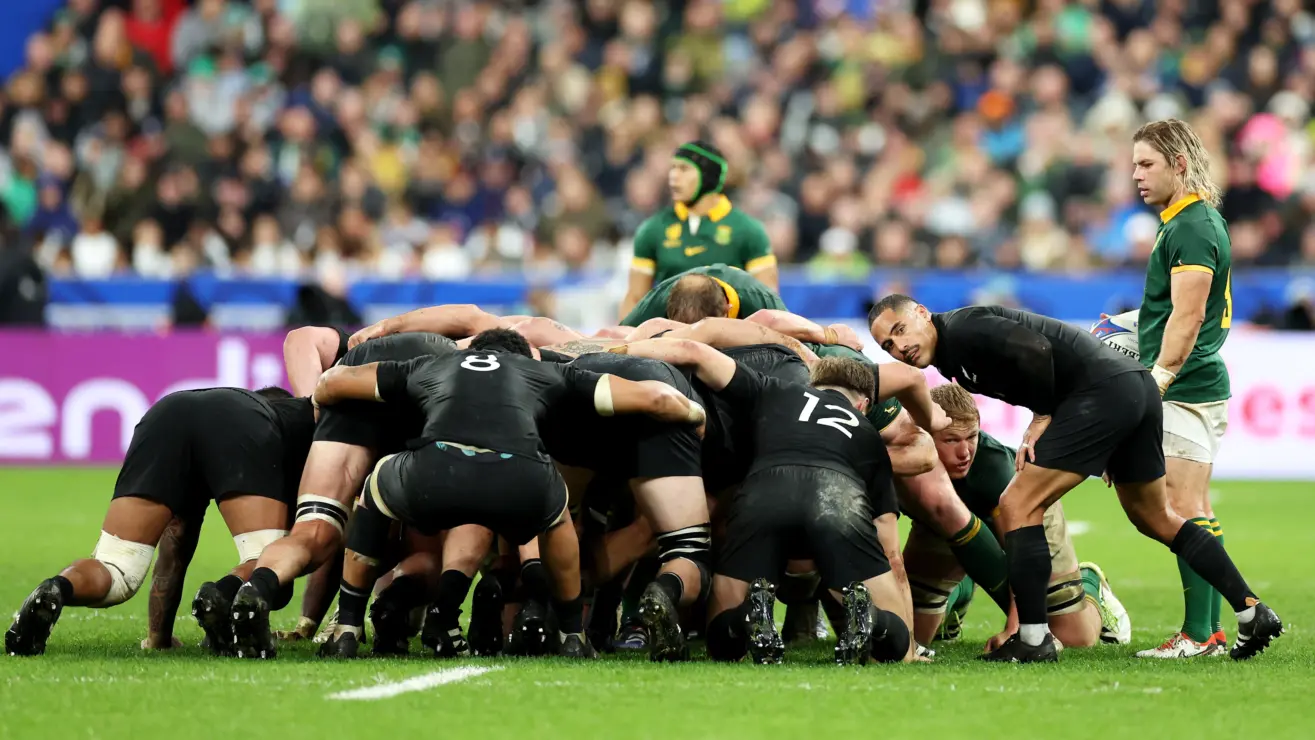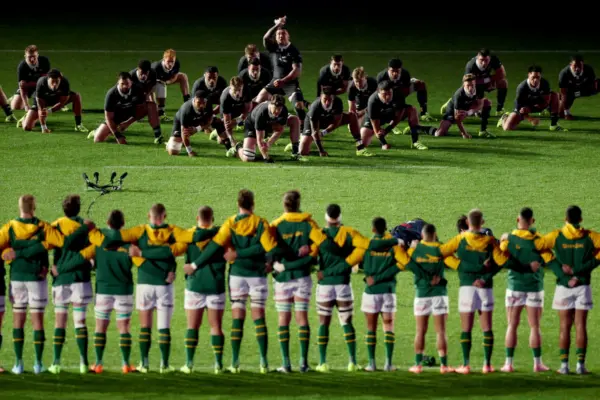
After a week of jawing over the complexities of rugby’s lawbook and the speed of the game, South Africa and New Zealand will – mercifully – at last clash in the opening encounter of the .
Both Rassie Erasmus and Dave Rennie, the sides’ respective head coaches, have been pointed in their press engagements ahead of the first Test as they perhaps seek to put a bit of pressure on the officials ahead of four back-to-back Tests between the two heavyweight nations.
There was plenty to consider in the selections made by the Springboks and All Blacks, not least the world champions omitting captain Siya Kolisi – though working his way back from injury, the flanker trained this week and .
The installation of Paul de Villiers nonetheless comes with the breakdown likely to be a key battleground, and the tourists can welcome Ardie Savea back into the fold to bolster their back row.
A fascinating clash of tactics could well be in store at Ellis Park – here are five individuals who could be decisive:
Paul de Villiers, South Africa
Let us begin with the Springboks’ openside, who has been rewarded for his strong Nations Championship form with selection ahead of Siya Kolisi. De Villiers has a classical scavenger’s build, and will surely be tasked with disrupting the All Blacks’ ball, with New Zealand making no secret of their desire to play with pace.
There is plenty of jackal threat within this South Africa pack, which has not always been the case. Malcolm Marx and Jasper Wiese are both proficient over the ball, and how referee Matthew Carley handles their attempts to stymie and stall New Zealand possession could be pivotal – particularly with the All Blacks having shown such willingness to play multiphase, even in their own half.
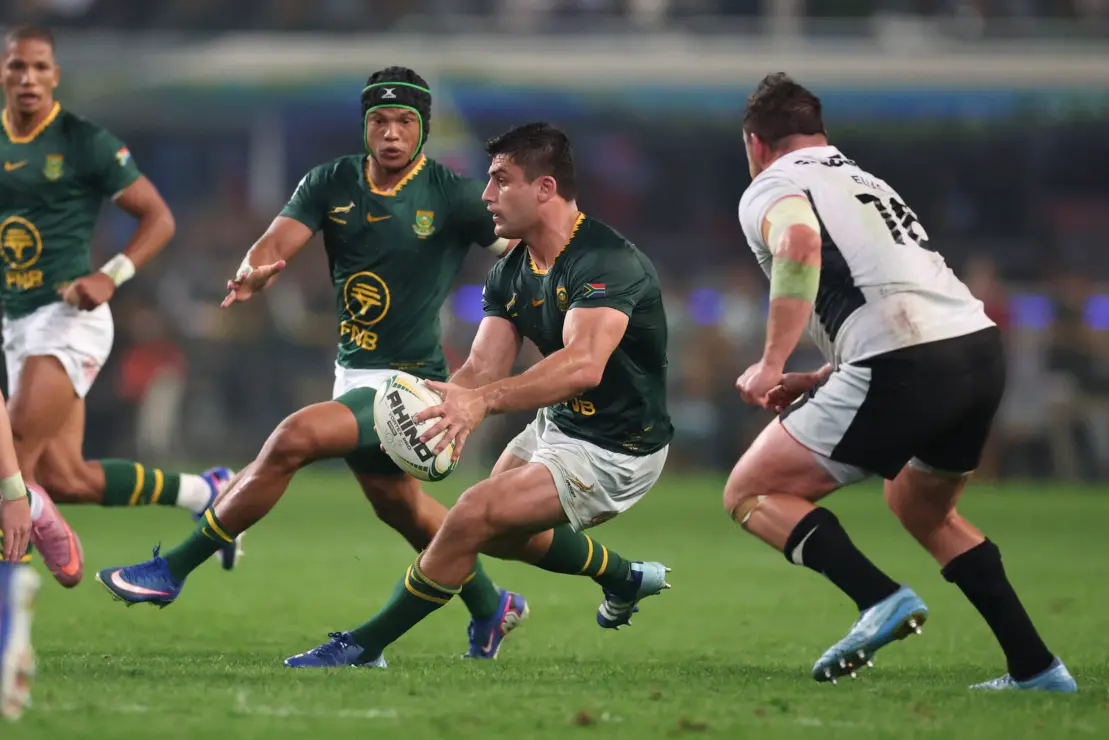
Tupou Vaa’i, New Zealand
Equally instructive is the make-up of New Zealand’s back row. is no surprise after the captain was cotton-wooled for the tour matches, and Vaa’i’s selection on the blindside had similarly appeared likely after his successful deployment there against Ireland in July. Vaa’is is a strong carrier but crucially provides an extra long-limbed lineout jumper to match South Africa’s Pieter-Steph du Toit. The All Blacks’ attack has shown some nice attacking variety in their lineout launch plays since attack coach Mike Blair, the former Scotland scrum half, arrived alongside Rennie, and Vaa’i may help free up Savea.
There is a risk, though, to the selection. With Vaa’i in the starting side to cover, New Zealand have eschewed a lock on the bench and perhaps look a little lightweight with Anton Segner and Peter Lakai two of their five forward replacements. Could the heft and experience of Patrick Tuipulotu have been preferred? Segner and Lakai will be tasked with upping the intensity in the final quarter but matching the Springboks physically will be key.
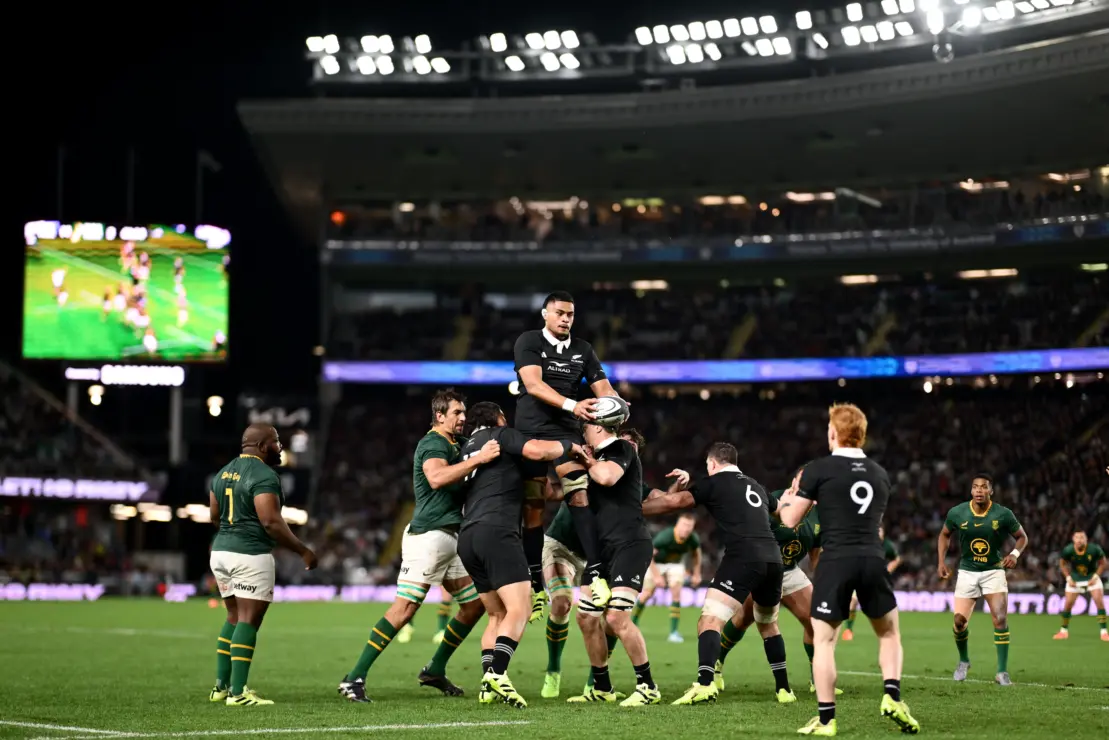
Ruben Love, New Zealand
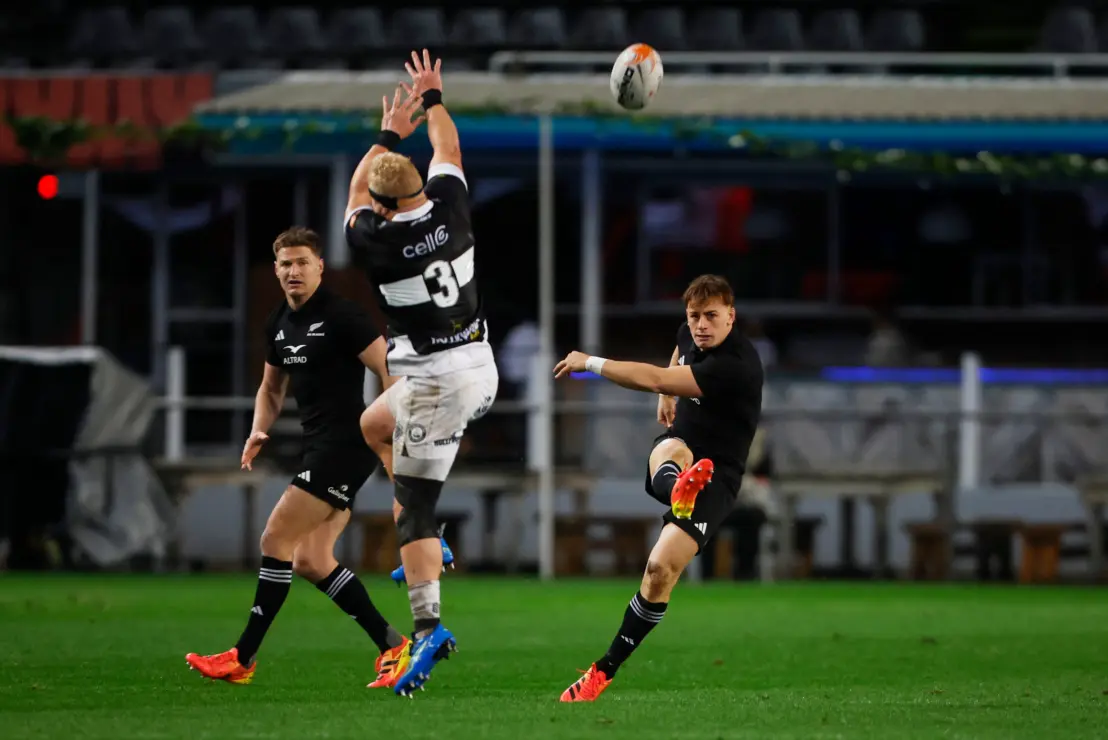
It says a lot about the manner in which Ruben Love has seized his opportunity this year that his starting spot never really felt under pressure from either Beauden Barrett or Richie Mo’unga – at this stage at least. Ellis Park and the world champions will ratchet the pressure up another notch for the young fly half, but he has .
Where can he hurt the Springboks? Certainly, the territorial kicking game will be vital. With Jordie Barrett and Damian McKenzie in the side as well, New Zealand can vary their first receiver to create both opportunities in attack and at finding backfield space. South Africa’s aggressive blitz defence can leave spaces on the edges at times, too: look for Love to try and target Josh Moorby and Will Jordan – two solid aerial operators with comfort playing at full-back – in the spaces between the hosts’ wings and Damian Willemse.
André Esterhuizen, South Africa
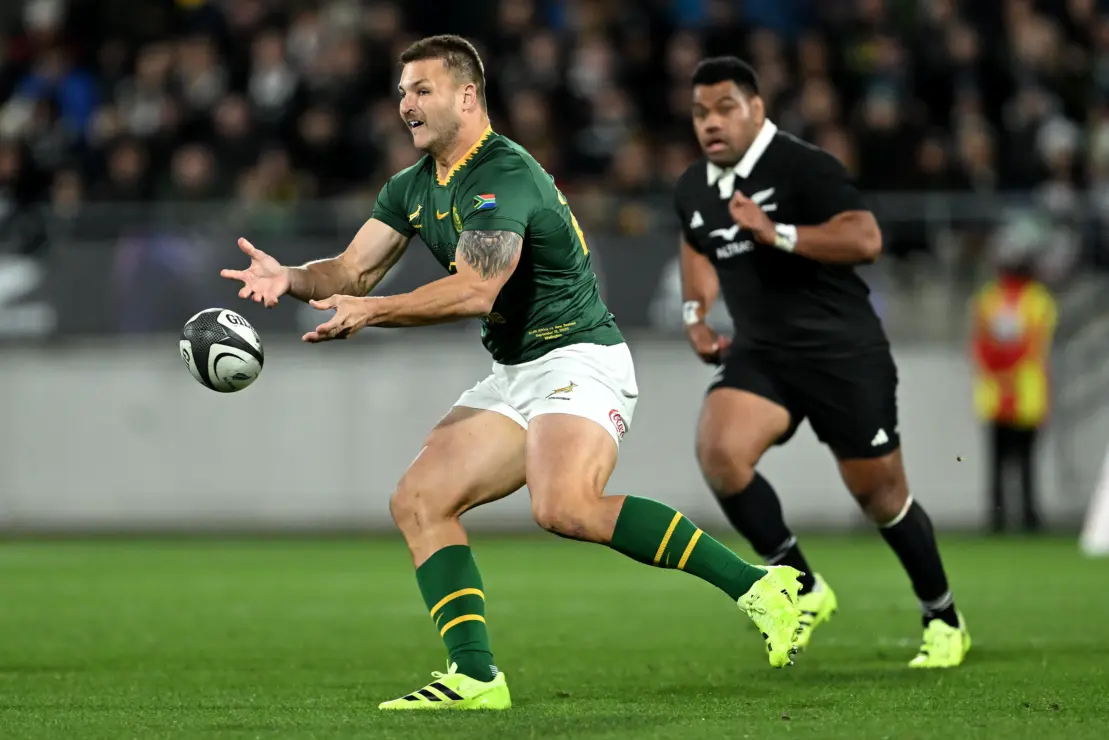
What luxury it must be for South Africa to name a player like Esterhuizen on their bench and essentially get two for the price of one with his ability to cover the flank and centres. The hybridisation trend of 2025 saw a number of nations experiment with individuals who can play in the forwards and backs, and New Zealand might have unleashed one of their own in Leicester Fainga’anuku if not for an ill-timed injury for the wing-cum-centre-cum-flanker.
Esterhuizen, though, was operating at an extremely high level in his dual role last year. His introduction in Wellington, which came at inside centre, when these two last met transformed the complexion of that encounter, though it may be that he is required in the back row at some stage here.
Ethan de Groot, New Zealand
It feels telling that South Africa have plumped for their best scrummaging props in Ox Nche, fit again after injury, and Wilco Louw. New Zealand have looked a little vulnerable in that area in their tour matches, though Ethan de Groot and Tyrel Lomax are more than capable of holding their own, and have a strong set-piece hooker in Codie Taylor between them.
The trio lasted 66 minutes in the World Cup final, which proved crucial to securing parity up front. They may have to go that deep again – and at the lung-sapping altitude of 1,753 metres up on the Highveld.