COMMANDING 28 Punjab Battalion in the insurgency-prone region of Upper Assam, my superiors raised eyebrows when I started interacting with some dreaded terrorists.
Terrorism was at its peak there in the 1990s.
One day, the Brigade Commander accosted me, visibly concerned, and cautioned me that I was exposing myself to grave danger. However, his eyes lit up when I replied, “Sir, it is just an endeavour to root out terrorism without eliminating the terrorist.” I elaborated that brute force could be employed any time, but our efforts to win the hearts and minds of misguided Assamese youngsters might yield results. “The aim is to change their mindset and make them join the national mainstream – even though it is the job of the civil administration,” I added. His silence meant acquiescence.
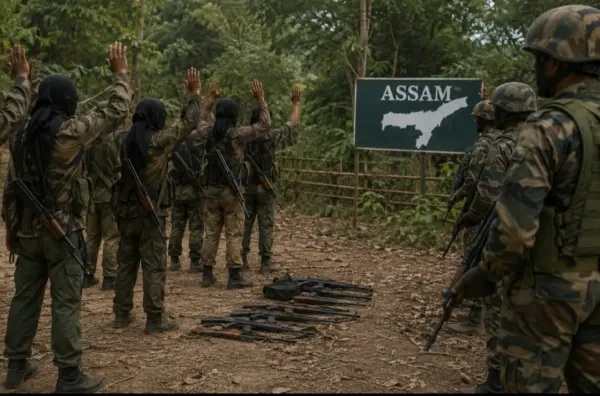
Keeping a steady nerve under fire, we conducted many cordon-and-search operations on the basis of intelligence inputs. When cornered, a few terrorists instantly dropped their weapons and raised their hands in surrender, seeking mercy. We had the option to instantly shoot and kill them and earn laurels. But I shouted on the spur of the moment, “Fire band karo (stop firing).” Killing unarmed persons was contrary to the Army’s ethos and moral values. Their lives were spared; some of them were barely out of their teens. They led us to some more hardcore ones. We often employed loudspeakers to ask these cornered terrorists to surrender. Most of them gave up. A few chose to retaliate with intense firing; in the ensuing gunbattle, some were killed.
Habitations and hamlets were cordoned off during the hours of darkness and searched at first light. The element of surprise could be achieved by moving speedily and concealing the direction of our approach. Traversing marshes, massive banana plantations and arrays of thickset bamboo groves, and negotiating rivers, we waded through endless forests where virtually no daylight passed through the dense foliage.
My battalion apprehended several top-level terrorists. Irrational, religiously inspired and secessionist propaganda had subverted their thinking. Poverty, unemployment, lack of education and job opportunities, coupled with poor governance, appeared to have created a fertile ground for terrorism. Eliminating or killing terrorists was simpler. Guiding and coaxing these forlorn youth to shun arms was a cumbersome process. It was challenging to segregate these ULFA (United Liberation Front of Asom) terrorists from the multitudes among whom they thrived like fish in water. However, our interaction with the local religious heads made a difference.
When the state government rolled out a dignified rehabilitation scheme, we were able to persuade some hardcore terrorists to give up arms. They came forward in droves, acquiring the acronym SULFA (Surrendered ULFA). Some headway had been made in curbing terrorism.