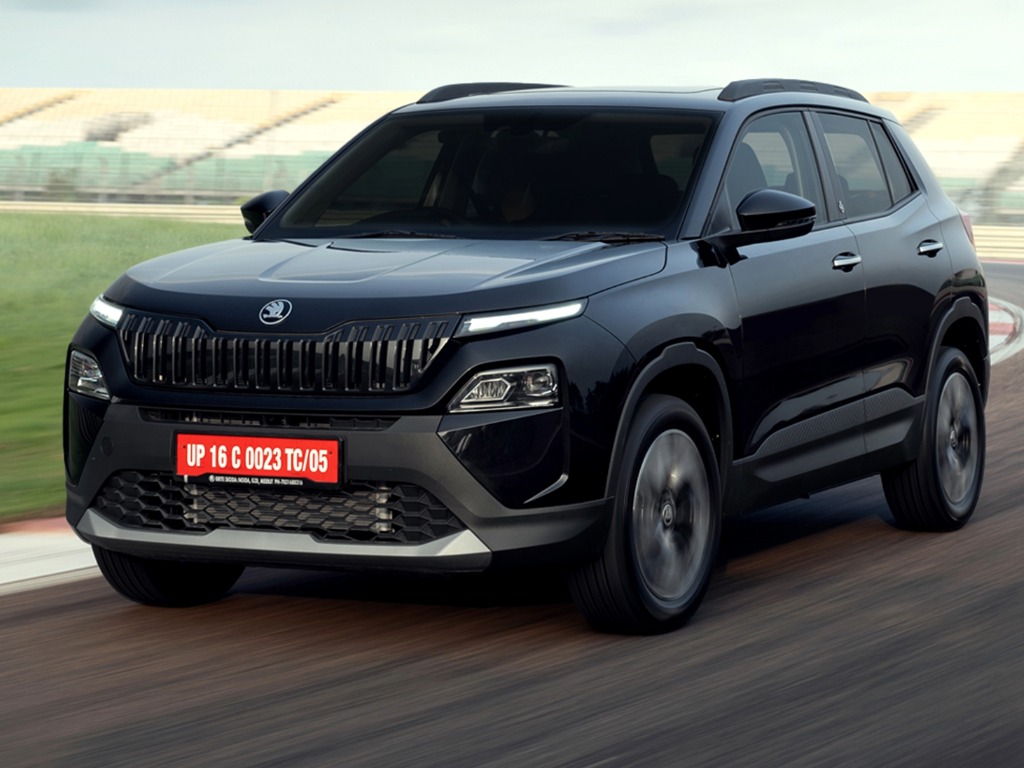
Skoda is assessing the possibility of introducing CNG-powered versions of the Kylaq, Kushaq and Slavia in India. The company is exploring the use of its 1.0-litre turbo-petrol engine with a CNG powertrain, although there is no confirmation yet on whether or when such variants will enter production.
Skoda India brand director Ashish Gupta indicated that the three models could potentially accommodate the technology because they share the 1.0-litre engine and MQB A0-IN platform. The Kylaq is currently being considered as the initial priority for the potential CNG programme.
Skoda Looking At CNG To Diversify Its Portfolio
Skoda’s current India range is predominantly petrol-powered, with the Superb set to bring a diesel engine back to the brand’s portfolio when it returns in 2027.
The company is now evaluating alternative powertrain options as consumer preferences and fuel-related considerations evolve. According to Skoda, factors including uncertainty around ethanol blending and concerns linked to the Middle East situation have affected sentiment towards petrol-powered vehicles.
A CNG option could allow Skoda to offer buyers a lower running-cost alternative while retaining its existing petrol-based platform architecture.
1.0 TSI Could Be Adapted For CNG
The potential CNG models would be based on Skoda’s 1.0-litre, 3-cylinder turbocharged petrol engine. In its existing petrol configuration, the engine develops 115 HP and 178 Nm and is available with both manual and automatic transmissions.
One of the challenges for Skoda will be ensuring that the CNG version retains an acceptable level of performance. Turbocharged petrol engines can deliver strong output for their size, while CNG operation typically involves some reduction in performance.
Skoda believes customers could accept a moderate reduction in output in exchange for improved fuel economy and lower running costs. The company is therefore examining how the powertrain could be calibrated to balance efficiency and the driving characteristics associated with its models.
Kylaq Could Be The First Priority
Among the three models, the Kylaq is currently the main focus of Skoda’s CNG evaluation. The compact SUV operates in a segment where CNG-powered alternatives are already available from several manufacturers.
The Maruti Suzuki Brezza, Tata Nexon, Hyundai Venue, Renault Kiger and Nissan Magnite are among the models competing in the compact SUV space, although not all offer CNG powertrains. The Tata Nexon is notable for offering a turbocharged petrol engine with CNG.
The Kushaq also competes in a segment where CNG options are available, with models such as the Maruti Suzuki Grand Vitara, Toyota Urban Cruiser Hyryder and Maruti Suzuki Victoris offering the fuel option.
The Slavia, meanwhile, could occupy a more distinctive position if a CNG version is introduced. CNG options are currently less common among mid-size sedans, potentially giving Skoda another way to differentiate the model.
CNG Could Move Beyond Entry-Level Cars
Skoda also sees potential for CNG vehicles outside the traditional budget-oriented segments. The company believes some buyers of relatively expensive vehicles could consider CNG if the overall product and pricing make economic sense.
The Kylaq is currently priced between Rs. 7.59 lakhs and Rs. 12.99 lakhs, while the Kushaq ranges from Rs. 10.69 lakhs to Rs. 18.99 lakhs. Pricing for the facelifted Slavia has yet to be announced.
Adding CNG technology would likely involve additional costs and could affect boot space and vehicle weight, depending on the final system. The pricing and packaging of any such variant will therefore be important in determining its appeal.
For now, Skoda’s CNG programme remains under evaluation. The company has not announced a launch timeline or confirmed which of its models will ultimately receive the powertrain.