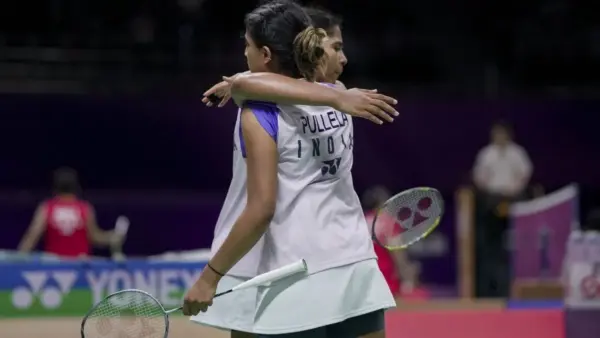
New Delhi, August 1: Treesa Jolly and Gayatri Gopichand are now one win away from securing a World Championships medal after the unseeded Indian pair produced a tactically mature performance to defeat Japan’s seventh seeds Rin Iwanaga and Kie Nakanishi 21-16, 21-12 in the women’s doubles pre-quarterfinals on Thursday.
Against a higher-ranked Japanese combination known for their patience and ability to stretch rallies, the Indians did not simply try to overpower their opponents. Instead, they altered their court positions, varied the pace and, crucially, disrupted Japan’s preferred rhythm from the opening exchanges.
The biggest tactical change in the game came through a role reversal. The idea was simple: Gayatri would create the openings, while Treesa would finish them.
Treesa/Gopichand Did Not Allow Japanese Pair To Settle
From the service and return phase, India tried to prevent Japan from settling into long defensive exchanges. Gayatri kept her serves low, forcing the Japanese pair to lift rather than attack immediately. Treesa then stepped forward to take the shuttle early, particularly targeting the body and hip area of the Japanese players.
That prevented Iwanaga and Nakanishi from generating the deep, high clears that could have pushed the Indians towards the backline and turned the match into a physical battle.
The first game was closely contested, with the scores level at 16-16. That was when the Indians changed gears. Rather than continuing the patient exchanges, they increased the pace and attacked downwards, winning five consecutive points to close out the game 21-16.
The second game demonstrated how effectively India had taken control of the match’s tempo. They built an early advantage and refused to allow Japan back into the contest.
Even a moment of frustration could not derail them. Treesa was shown a yellow card following a shuttle-related incident, but the Indians quickly regained their composure.
Calm & Composed Game From Indians
What made the performance particularly impressive was that Treesa’s attacking ability was not used recklessly. Instead of constantly attempting maximum-power smashes, India used Gayatri’s variation from the rear court to move the Japanese defenders before bringing Treesa into play at the net. The pair looked calm as well in the game and when the adrenaline went overboard, Pullela Gopichand, father of Gayatri Gopichand, was seen waving his hands from the sidelines to calm them down.
“He asked us to remain calm during the midgame,” Gayatri said in the post-match media interaction.
The result was a decisive 21-12 second game and, more importantly, a statement of tactical maturity.
For Treesa and Gayatri, the victory was not merely about beating the seventh seeds. It was about changing the way they played to beat them.
That adaptability could prove crucial in the quarterfinals, where India’s medal hopes now hinge on another tactical test.