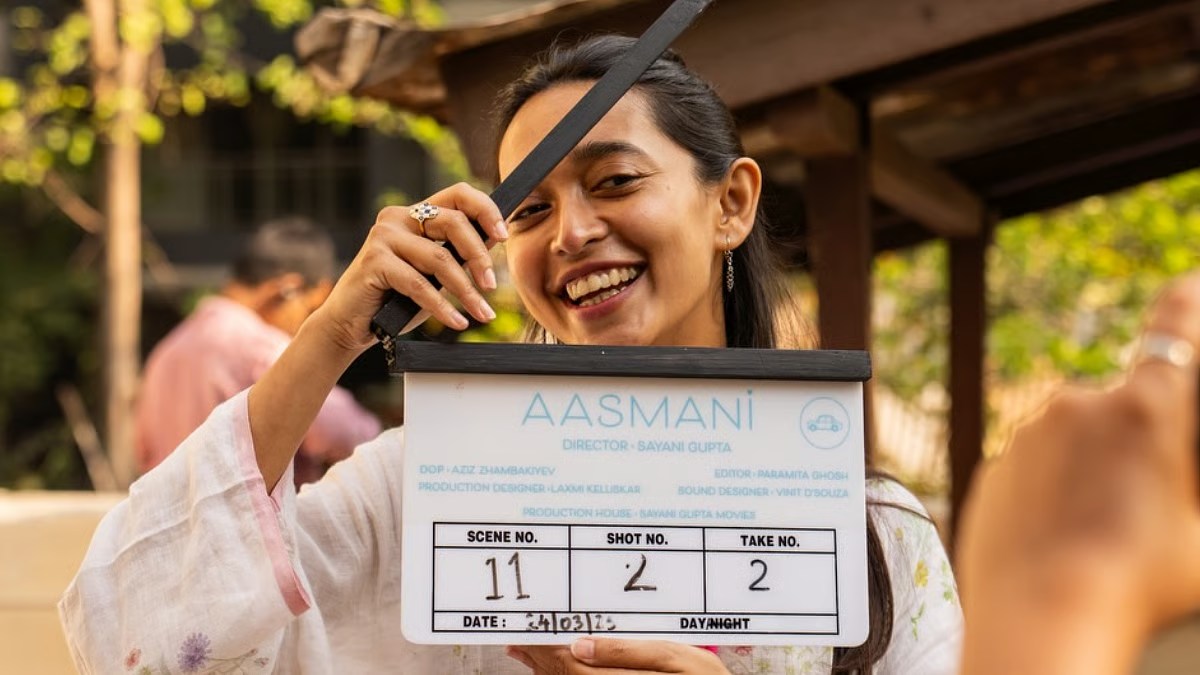
Actress Sayani Gupta has reacted to the copyright allegations surrounding her short film Aasmani, which marks her directorial debut, after the Indian Film Festival of New Zealand (TIFFNZ) officially withdrew its invitation to screen the film. Calling the development ‘deeply unfair,’ Gupta maintained that Aasmani is an original film and explained why she had previously chosen not to speak publicly.
Sayani Gupta Breaks Silence On Aasmani Copyright Row
Speaking to Hollywood Reporter India, Sayani said her silence did not mean acceptance or that she had nothing to say. Since the allegation was raised before the appropriate authority, Gupta said she chose to follow due process and believed the facts should be presented there rather than debated through WhatsApp groups, inboxes or public opinion. She added that silence can sometimes allow ‘noise’ to overshadow the truth.
‘Respectfully Held My Truth’
Sayani noted that the claim was raised by a fellow FTII filmmaker in connection with an unfinished documentary project, which Gupta said she was unaware of. The actress acknowledged that the filmmaker has every right to raise a grievance, while maintaining that she has respectfully stood by her version of events. Gupta said the claim was based on assumptions and that the filmmaker had not watched her short-fiction comedy film. She further maintained that she had no knowledge of the other filmmaker’s ‘unfinished’ documentary project.
“There is a difference between an allegation and a finding. Aasmani came from its own world, its own journey. And without any knowledge of any other film in development. To see that distinction collapse into a public narrative of ‘copyright infringement’ is not only misleading, it is deeply unfair to the film and to everyone who has tirelessly worked on it. What has been troubling to watch is this become a copyright issue when it absolutely isn’t one.”
‘Copyright Protects Expression, Not Every Shared Idea’
Gupta said Aasmani’s script was “created over years and finally written and developed into the film that exists today.”
Gupta further argued that two films can share a broad idea, theme or elements such as a woman, a car, aging and independence, while still existing independently without one being copied from the other. She emphasised that copyright protects the expression of an idea, rather than every shared concept or emotion.