Not many would have imagined that the T20 format would rule the cricket conversations, both commercially and in terms of popularity when the first match was played 23 years ago.
Yet, the shortest format has taken cricket beyond the traditional cricketing nations.
With the sport having its largest fanbase in the subcontinent and the traditional Test playing nations, the ICC, along with several Associate member nations have taken to T20 cricket and franchise leagues – largely following the success of the IPL – to generate revenue and develop talent.
T20 cricket has become a proven sports business model. The greatest example is the SA20, which has established itself as a revenue generator for South African cricket.
The league was launched when CSA was battling a prolonged financial crisis. The board reported a profit of about $45.6 million in the 2023-24 financial and $15.25 million in 2024-25, resulting in a massive turnaround where it had lost between $6.5 million to $12.7 million in the previous three years.
“T20 is something that people like. It is a short format, which is why various leagues are popping up all over the world,” said Anshul Garg, Group CEO, SriYentra Sports Services, the company that is set to launch the East African T20 league, told DH.
Such business models are seen in the United States, Canada, the United Arab Emirates and Nepal, among others, where cricket is in its nascent stage, yet with the onset of the leagues, these countries have repeatedly challenged top nations on the grandest of stages like the World Cup.
These leagues generate revenue from a host of streams, including broadcasting rights, sponsorship and franchise fee.
The T20 World Cup is now a 20-team affair. In the last two editions, several Associate nations left a lasting impact, with a few upsets and many teams giving major scares to top-ranked sides. With players from these countries often participating in global leagues, the gap between teams is reducing.
The shortest format has the potential to seep into untapped markets and create a cricketing ecosystem. Italy qualifying for the T20 World Cup earlier this year was a massive step in that direction and leagues like ESA T20 and the ETPL will help catalyse the process.
With an eye on the European market, the European T20 Premier League begins in less than ten days from now with marquee owners and players backing the tournament jointly featuring city-based teams from Ireland, Scotland and the Netherlands.
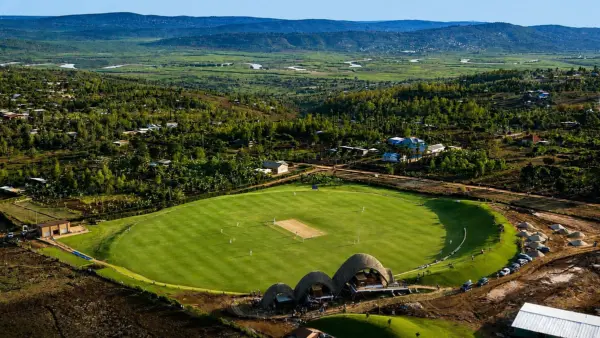
Similarly, with the World Cup, albeit in the 50-over format, being hosted in South Africa, Zimbabwe and Namibia, the ESA, hosted jointly in Rwanda, Zambia and Malawi eyes to make cricket the second most popular sport in the continent that has a young, sports-loving demography.
A league in East African nations would have been far-fetched before the summer of 2008, but such has been the impact of IPL and T20 leagues around the world.
“Malawi, Rwanda and Zambia are not small countries at all. They have a very good, about 56 million population, very young demographic. Most importantly, they are politically stable and well-governed with all cricket infrastructure available,” Garg said, while expanding on the idea of a league in these nations.
According to Garg, the newest league, set to launch in June-July 2027, will be profitable in the first year, which most leagues have failed to achieve.
The demographics and operating cost factor
An added advantage for the league is the location. Operating cost in Africa would be much lesser compared to that in Europe, the US or even Canada.
“One of the big levers economically is that our operational cost of organising the league in Africa is minuscule when compared to the European Cricket League, Garg said.
“Plus the fact that a lot of people, a lot of the demography is like the Indian demography. There are a lot of young people in Africa and that is demonstrated by 1.2 billion YouTube sports views every month that the continent records,” he added.
Another factor that the league is betting on is real-money gaming. Unlike India, gaming is legal in Africa, attracting a large fan base.
All international players can participate in the quotas defined in the 20-member squad,” he added, indicating that the league is set to go global.
The league also eyes using tourism to its advantage with a window in the African winter – a period when wildlife migration attracts tourists from all over the world.
The franchise model
T20 leagues are turning to franchise model. The England Cricket Board attempted to launch The Hundred with Counties themselves owning the franchise. However, in the ongoing sixth season, most teams have been sold to private businesses, a majority of them from the IPL.
The Big Bash League in Australia has also contemplated selling stake to private players. The SA20, CPL and the ILT20 of the UAE also have teams owned by IPL franchises. This creates interest and support directly from the sub-continent fans, who can now follow their favourite IPL teams globally.
The franchise model has proven to be a success, with Royal Challengers Bengaluru hitting a whooping brand value of over $300 million recently. Earlier in the year, the franchise itself was sold for a record $1.78 billion, white original owner Vijay Mallya had bought the team for $111 million back in 2008, which was paid over a decade.
“We have kept the franchisee fee not upfront but an yearly franchisee fee, which is about $3 million per year,” Garg said, highlighting the lower cost.
According to estimates, the franchises could be valued at $40-45 million in the next five years.
The World Cup factor
The ODI World Cup returns to Africa after 24 years for the 2027 edition. This is also the first multi-national cricket tournament on the continent since the 2007 T20 World Cup, which incidentally paved the way for the shortest format to explode to what it is today. The excitement would also help in the newest league to catch eyeballs, according to Garg.
“The Cricket World Cup will be hosted by South Africa, Zimbabwe and Namibia. This is basically just helping us to make sure that the viewership all across Africa, which is about a one point, almost similar demography as India, 1.6 billion population. The viewership should get an immediate impact, immediate upside,” he said.
“A lot of people consume content on their mobile phones with zero drop and very low latency. They are almost addicted to watching cricket content or any other sports,” he said.
According to Garg, cricket is the third most popular sport in Africa, only behind football and basketball. He believes that it could pip the former to be the second most viewed when the World Cup begins.
“That itself gives a lot of valuation jump to us. You know, we foresee that the franchisees after five years, because of the World Cup happening, as well as because of the cricket including in L.A 2028 (The Olympics), we foresee that the valuation for the franchisor should be around 300 million dollars after five years,” he said.
T20 leagues are spreading fast and tournaments in Associate nations are played by marquee players, who attract eyeballs and sponsors alike.
While Test cricket and the ODI World Cup remain the pinnacle of the sport for most purists, there is no hiding the fact that the formats are commercially loss making barring a few top teams. T20s have captured the global markets and is slowly, but surely making cricket a global sport.