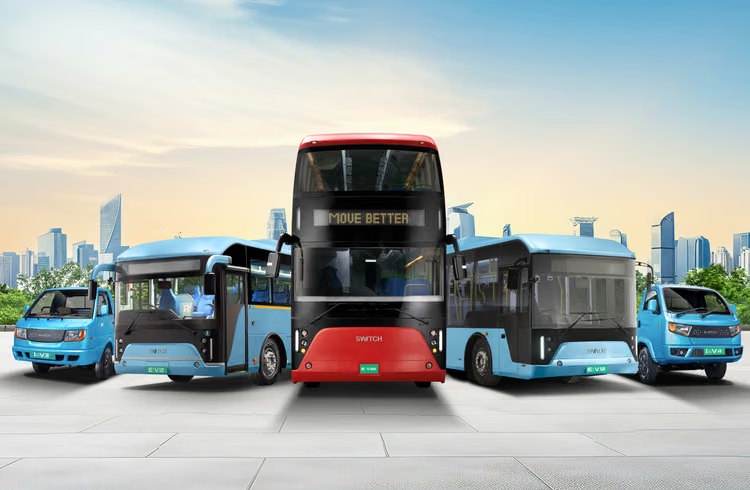
SWITCH Mobility, an electric bus and light commercial vehicle manufacturer and part of the Hinduja Group, has announced targets to reach carbon-neutral operations by 2027 and net zero emissions by 2040. The announcement was made on August 15, India’s 80th Independence Day, and aligns with the Indian government’s broader national net zero goal of 2070 under its Viksit Bharat 2047 development framework.
The company said its fleet of electric vehicles has collectively covered 150 million kilometres on Indian roads and helped avoid over 150,000 tonnes of CO₂ emissions — an amount it equates to preserving more than five million trees. Globally, the company has over 5,000 electric vehicles in operation, with a combined distance of more than 185 million kilometres clocked across markets.
SWITCH Mobility currently has more than 2,900 electric buses and 2,200 electric light commercial vehicles (eLCVs) deployed across India. Its electric bus segment serves public transit operators, while its eLCV range — branded the SWITCH IeV Series — targets last-mile logistics for urban delivery. The company said demand for the eLCV segment has been driven by the growth of e-commerce and the operational cost advantages of electric powertrains over diesel alternatives.
The company’s stated sustainability framework centres on three areas: carbon neutrality, water positivity, and resource efficiency. SWITCH Mobility participates in several international sustainability initiatives, including RE100, the Science Based Targets initiative (SBTi), the Climate Pledge, CDP, GRI, and the Dow Jones Sustainability Indexes. These programmes require member companies to report on emissions and, in some cases, commit to independently verified reduction targets.
India has set a national net zero target of 2070 under its Paris Agreement commitments. To accelerate the shift away from fossil fuel-powered transport, the government has implemented the FAME (Faster Adoption and Manufacturing of Electric Vehicles) scheme, which has provided subsidies for electric bus procurement by state transport undertakings. Several Indian cities, including Delhi, Mumbai, Bengaluru, and Pune, have inducted electric buses into their public fleets under this programme.
The electric bus market in India remains at an early stage relative to the size of the overall public transport fleet. According to government data, India operates several hundred thousand buses across state-run and private networks, with electric buses accounting for a small but growing share. Analysts have noted that high upfront vehicle costs and gaps in charging infrastructure continue to present barriers to faster adoption, even as the total cost of ownership over a vehicle’s lifetime increasingly favours electric options.
SWITCH Mobility was formed using engineering resources and manufacturing expertise drawn from Ashok Leyland, another Hinduja Group company with a long-standing presence in India’s commercial vehicle sector. The company operates in both the Indian and international markets, with its electric double-decker bus, the EiV22, among its prominent products. The EiV22 received the Vivekananda Sustainability Award in 2023 and was recognised at the Electric Vehicle Brands of the Year Awards in 2024.