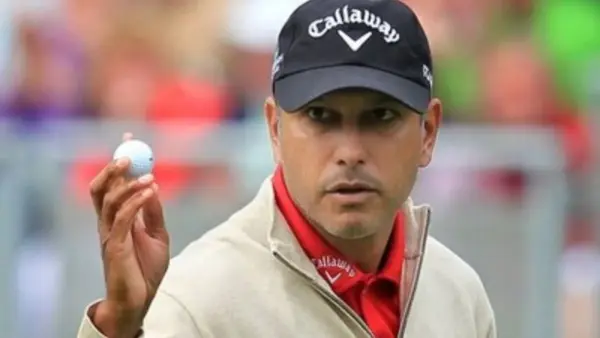
New Delhi, August 15- Indian golfing legend Jeev Milkha Singh believes India’s golfers have a strong opportunity to challenge for medals at next month’s Asian Games in Japan, but has urged both the men’s and women’s teams to focus heavily on their short game.
The 54-year-old former PGA Tour winner, who has competed regularly in Japan for more than a decade, said mastering chipping, putting and wedge play could prove decisive when the golfers compete at the Aichi-Nagoya Asian Games from September 19 to October 4.
“My advice to both the men’s and ladies teams for the Asian Games is to make sure you practice your short game a lot,” Jeev told PTI from Tokyo, where he is currently competing in the Senior Japan Open.
“Because in Japan, the way the greens play and around the greens, the slopes do a lot of short game homework that will help you succeed. A lot of chipping, putting, and wedge play so that even if you miss the green, you have a good chance of making up and down.”
Jeev identified the pace and undulations of Japanese greens as one of the biggest obstacles Indian golfers will face. According to him, the difference in green speeds between India and Japan could require considerable adjustment.
“The greens are lightning fast. Normally in India, we play on greens rolling at a speed of about 8 or 9. Whereas in Japan, you’re playing on greens rolling at a speed of 12 and 13. So the difference will be putting on the grass in Japan.”
The experienced golfer also stressed the importance of approach-shot accuracy and ensuring that players position the ball on the right portion of the green.
“It’s quite tough. You’ve got to make sure you miss the green on the right side or you place your shot on the green on the right side so that it can be aggressive with the putt. And there are a lot of slopes on the greens,” he said.
Wind could provide another significant test, with Jeev advising the Indian contingent to rely on course maps and yardage books while judging changing conditions.
“Thirdly, it gets very windy in Japan. Normally, the conditions are such that there’s a lot of breeze. There’s a lot of wind. So you’ve got to make sure you have the right wind conditions available to yourself. You check it on the map on the golf course and on your yardage book so that you can get the right distance,” he said.
“The wind out here swirls quite a bit. Sometimes you feel on the tee shot, it’s going right to left and within a minute or two, you’ll feel, oh, it’s gone left to right.”
Jeev urged the golfers to trust their preparation and stick to the information available in their course maps and yardage books rather than being distracted by rapidly changing wind conditions.
“You want to stick with the course map and also your yardage book, which way the wind is blowing. You’ve got to stick with that and believe in it.”
India will field a six-member golf contingent at the Asian Games. Yuvraj Sandhu, Veer Ahlawat and Saptak Talwar will represent the men’s team, while Aditi Ashok, Diksha Dagar and Pranavi Urs make up the women’s squad.
Beyond the Asian Games, Jeev also spoke about the importance of young Indian golfers learning from experienced professionals through competitive exposure.
He said his conduct on the course and ability to handle pressure were among the key lessons he hoped younger players could pick up while competing alongside him in the Indian Golf Premier League (IGPL).
“I think the best thing I can pass on is when I play tournaments on the IGPL and these young kids play with me: the way I conduct myself on the golf course and how I handle myself under pressure.”
“I think that could be the best learning these kids can get from it. When I used to play with top professional golfers like Vijay Singh, still do Ernie Els, Tiger. When you play with them, that’s the best learning experience you can have. And I think that’s what I want to share with the people at IGPL.”