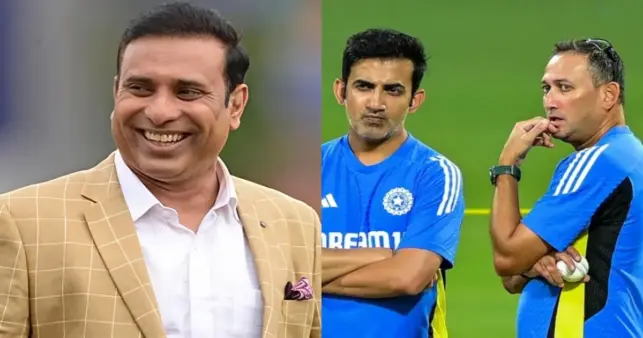
Former India batter VVS Laxman is set to be appointed as the Board of Control for Cricket in India (BCCI) Director of Cricket, according to sources.
Laxman, who currently heads the board’s Centre of Excellence (CoE), is expected to retain his existing responsibilities while taking on a broader and more clearly defined role within India’s cricketing structure. The proposed designation would place Laxman above India men’s head coach Gautam Gambhir and BCCI chief selector Ajit Agarkar in the administrative hierarchy relating to cricket operations. The change is expected to give Laxman greater oversight across different aspects of the national cricket setup, while Gambhir and Agarkar would continue to retain their respective responsibilities involving coaching and selection.
Laxman’s work at the Centre of Excellence has already involved several areas of India’s cricket development system. He has overseen junior national teams, player rehabilitation and pathways for both men’s and women’s cricket. The CoE has also become an important part of the BCCI’s efforts to support players through injury management, conditioning and development programmes. As Director of Cricket, Laxman is expected to have additional responsibility for staff appointments. This would give the former India batter a more direct role in decisions concerning personnel across the cricketing setup. The move could therefore make his position more influential in coordinating the various departments involved in India’s international and developmental programmes.
Laxman’s responsibilities would extend beyond the senior men’s team. His existing involvement with junior teams and pathways for players means the new role is likely to cover a broader ecosystem, potentially linking the development structure with India’s senior international programmes. His experience as a former international player and his work within the BCCI’s development system would provide continuity as the board seeks to strengthen coordination across different levels of Indian cricket. For Gambhir, the appointment is not expected to remove his authority as head coach of the senior men’s team. His primary responsibility will remain coaching and managing the national side, including preparation, tactics and performance during international assignments.
However, the creation of a higher administrative position could establish a clearer reporting and decision-making structure around the senior team and other cricket operations. Agarkar, meanwhile, would continue to head the selection process as chairman of the BCCI’s senior men’s selection committee. His role involves selecting squads and making decisions within the framework of the selection committee. Laxman’s proposed position would therefore represent a broader administrative and cricket-development responsibility rather than a replacement for the selector’s core function.
The appointment could also strengthen coordination between selection, coaching, player development and rehabilitation. With the Director of Cricket overseeing a wider range of operations, the BCCI may have a single senior figure responsible for ensuring that different parts of the system work together. This could be particularly relevant in managing the transition of players from junior cricket and domestic pathways into the senior international setup. Laxman has already held several leadership roles within Indian cricket and has been closely involved with the BCCI’s Centre of Excellence. His expected elevation would formalise many of the responsibilities he has been handling and give them a wider organisational mandate.
The new structure could also provide the BCCI with a more centralised approach to staff appointments and cricket development. If confirmed, the appointment would represent a significant change in the BCCI’s cricket administration, placing Laxman in a senior position overseeing a wider range of operations. Gambhir and Agarkar would continue in their coaching and selection roles, respectively, while Laxman’s proposed position would sit above those functions in the broader cricketing hierarchy. The move is expected to bring greater structure to how the board manages India’s national teams, player pathways, support staff and development programmes.