
For Yashasvi Jaiswal, the first Test against Sri Lanka at Galle, starting on Saturday, will present a familiar challenge in new surroundings.
To find the magic formula between attack and defence, when to hold back and when to go full-throttle, a chemistry he has been trying to perfect. He has both the games, can seamlessly switch between attack and defence, but sometimes the dilemma has struck him and hastened his downfall.
Apparently, the best time to bat in Asia is when the ball is new, the wicket is fresh and there is pace on the wicket. Former India batsman Ajinkya Rahane talked enviously of the openers getting the best of the conditions to bat, as opposed to the middle-order batsmen. “The easiest position to bat in was top two in India at that time because the ball was new and the wicket was good. Batting in the middle order became tougher as the ball got older, started reversing, and the pitch deteriorated. Sometimes, even scores of 30 or 40 were really crucial,” he told The Indian Express.
But it could be different in Sri Lanka. There could be swing on offer when batting first on the first day, as the curators leave grass for the surface to not dry up and deteriorate prematurely. Cheteshwar Pujara rates his 145 at SSC in 2015 as one of his toughest knocks because the ball swung viciously on the first day. Some decks, however, could spin exaggeratedly from the first ball. It could be a leap into the unknown. It would not invoke pre-game nightmares like the SENA pitches, but presents challenges of its own.
 Yashasvi Jaiswal in action. (FILE photo)
It’s not a haven of runs for openers, Sri Lanka’s former talisman Dimuth Karunaratne told Cricinfo. “It’s the toughest place,” he said. “Usually after a couple of overs, you can get a gauge on what the pitch is doing and whether the seamers or spinners are the bigger threat. Not there. Sometimes the spinner is on, and the new ball is jumping from here. Then a seamer bowls and it jumps from there. How to make sense of this? You have no idea what is going on.”
That may be the simplest description of Jaiswal’s challenge. It is not about blocking everything, but about making the right decisions. To make sense of the conditions and tailor his game accordingly. In recent times, specifically in the series against South Africa, he was split between attacking and defending, often veering to extremes. But he could revert to some of his knocks in the home series against England. In his 209 against England in Visakhapatnam in 2024, he batted through the first day as India lost six wickets at the other end to Shoaib Bashir, James Anderson, Tom Hartley and Rehan Ahmed. He absorbed the pressure early, scoring at a measured pace before gradually increasing his attacking intent.
That is the approach India will want from him in Galle: positive and attacking, but not rushed. Maintaining that balance will become increasingly important as conditions change and the pitch begins to wear.
His second innings knock against New Zealand in Bengaluru later that year offered another example of that balance. Jaiswal was on 10 off 30 balls, but attacked once he felt more settled. He cut and drove through the off side and took on Ajaz Patel. He moved from 10 off 30 to 35 off 52, but then fell trying to attack the left-arm spinner again, charging down the track only to be stumped by Tom Blundell.
It was Jaiswal in a nutshell. His aggression can change a Test match, but it can also get him out. The most productive shot can be his biggest weakness too. The cut shot gives him plenty of runs, but it has also dismissed him eight times, making the stroke both productive and risky.
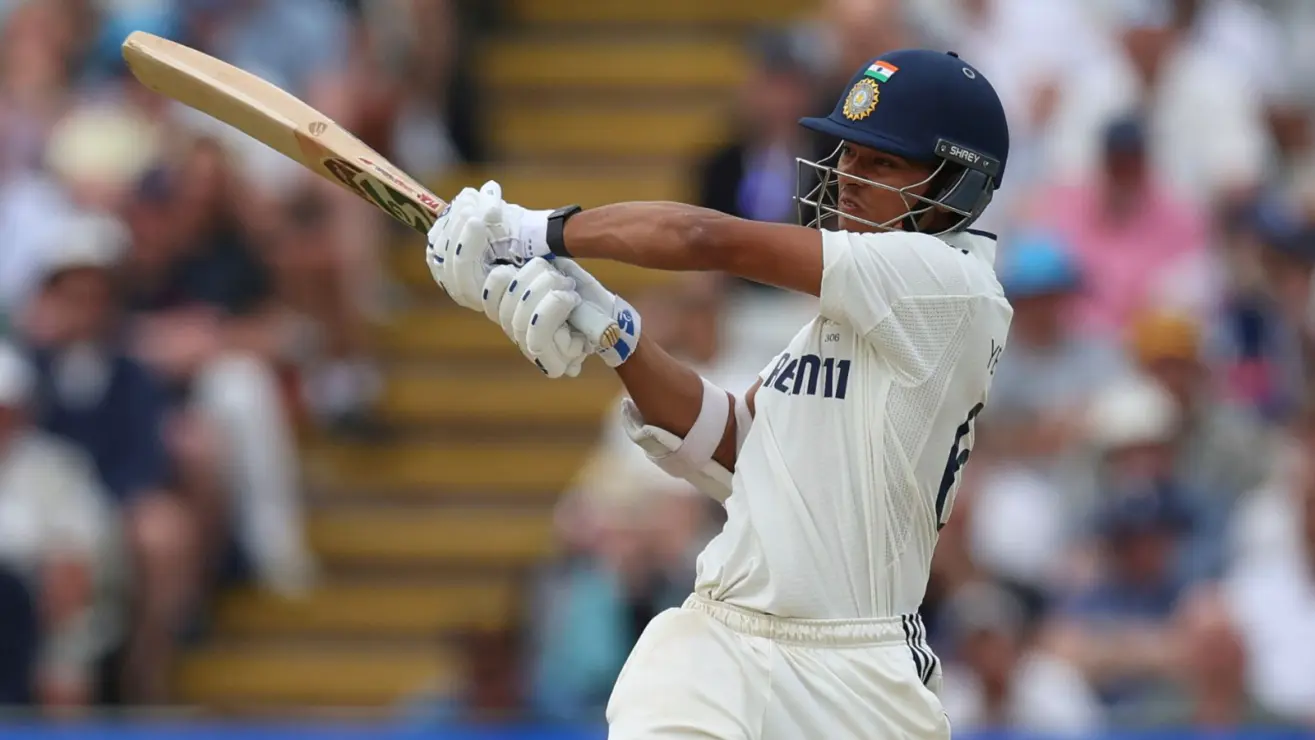 Yashasvi Jaiswal playing a shot. (AP photo)
It brings him runs because he trusts his hands and can hit the ball late. But the same instinct can make him play at balls that are not quite in his hitting zone. In the warm-up game, where he smoked a 46-ball 61 in the second innings showed both his sides. He scored when he got on top of the bounce, but struggled when the ball stayed low.
His aggression has made him successful. Jaiswal has scored more runs than anyone else in the subcontinent since debuting in July 2023, amassing 1417 runs in 15 matches at an average of 54.50 with three centuries. All those runs have come in India, but batting in Asia is also about adapting when the pitch changes. A ball that can be driven or cut comfortably in the morning may not be there to be hit in the same way later in the day. The longer the innings goes, the more important good judgement becomes.
In Galle, knowing when to attack and when to show restraint could determine how long he stays at the crease. With Tests being his only format for now for India, every opportunity becomes more valuable. Galle will not just test his ability to control his aggression; it will also offer an early measure of how effectively he can adapt and thrive in Asian conditions beyond India.