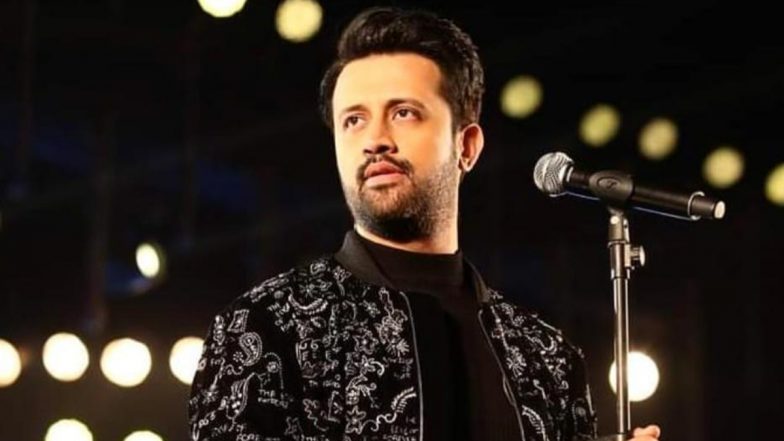
Pakistani playback singer Atif Aslam, a voice synonymous with numerous Bollywood hits, has candidly spoken about his nearly decade-long absence from the Indian music scene, revealing that the ban, rather than hindering him, has instead pushed him towards self-discovery as an independent artist. In a recent interview on Kris Fade’s YouTube channel, “One on One with Kris Fade,” Aslam acknowledged his enduring popularity in India, noting that his ardent fans still find ways to listen to his music through VPNs and by creating physical copies.
Atif Aslam on Ban on Pakistani Artistes in India
During his conversation with Kris Fade, Atif Aslam addressed the prohibition on Pakistani artists in India, stating, “It’s been almost 10 years since I was banned in India. That was the decision of the Indian government; they decided to ban artistes from Pakistan.” He further highlighted the reciprocal nature of the ban, mentioning that Indian artists are also currently restricted from working in Pakistan.
Aslam expressed a nuanced sentiment towards the situation, saying, “I don’t miss working over there, but I miss you guys.” He conveyed his appreciation for the unwavering support of his Indian fanbase, remarking, “Don’t feel bad about it, don’t feel sad about it. I always wanted to tell you that I miss you guys.”
Remarkably, the singer extended his thanks to those responsible for the ban, attributing his artistic growth to this period. “I have learnt a lot from playback singing, and if this ban didn’t happen, I think I would be unable to make my own music. So I thank you guys for that as well. I thank those who have banned me as well; otherwise, I wouldn’t be able to explore myself,” Aslam openly stated. He drew a parallel between his fans’ current methods of accessing his music via VPN and burned CDs to the early days of his career, when his debut single gained popularity through word-of-mouth, radio, and cassettes before his identity was widely known.
Watch Atif Aslam’s Interview With Kris Fade:
Why are Pakistani Artistes Banned in India?
The restrictions on Pakistani artists working in India significantly intensified in 2016 following heightened tensions between the two nations, particularly after the Uri terror attack on September 18, 2016. In response to these geopolitical developments, the Indian Motion Picture Producers Association (IMPPA) passed a resolution on September 29, 2016, instructing its members not to engage Pakistani artists and technicians in new projects until bilateral relations normalised. This period saw the cancellation of events, including an Atif Aslam concert in Gurgaon.
The ban was further solidified in February 2019, subsequent to the Pulwama terror attack on February 14, 2019, when the All India Cine Workers Association (AICWA) issued a complete ban on Pakistani actors and artists in the Indian film industry on February 18, 2019, threatening action against any organisation that continued to employ them. More recently, the Pahalgam terror attack, which occurred on April 22, 2025, further intensified tensions between the two nations and led to a brief round of hostilities in May 2025.
About Atif Aslam
Born on March 12, 1983, in Wazirabad, Punjab, Atif Aslam, now 43 years old, is a celebrated Pakistani playback singer, songwriter, composer, and actor. He commenced his musical journey in the early 2000s, releasing his debut album, Jal Pari, on July 17, 2004. Aslam made his Bollywood debut in 2005, first lending his voice to the song “Woh Lamhe” for the film Zeher, and also singing “Aadat” for Kalyug.
His distinct vocal style quickly garnered him immense popularity across South Asia, with numerous chart-topping Bollywood songs to his credit. Some of his most iconic Indian film songs include “Tera Hone Laga Hoon,” “Dil Meri Na Sune”, “Tu Jaane Na”, “Pehli Nazar Mein,” “Tere Bin”, “Main Rang Sharbaton Ka”, “Jeene Laga Hoon”, “Piya O Re Piya,” “Be Intehaan”, “Bakhuda Tumhi Ho“, “Bairiyaa,” “Janam Janam,” and “Tu Mohabbat Hai”.