With new goals in sight, Maruti will focus on multiple growth drivers such as small cars, SUVs, new powertrains and exports
In its Annual Integrated Report 2025-26, Maruti Suzuki has talked about various aspects of its business and plans for the future. The company has achieved annual sales of over 2 million units for three consecutive years. It is now aiming for 3 million sales per annum. Another key objective is to boost renewable energy capacity such as solar and biogas. This is part of the broader goal to support cleaner technologies.
7 new SUVs by 2031, multi-powertrain strategy
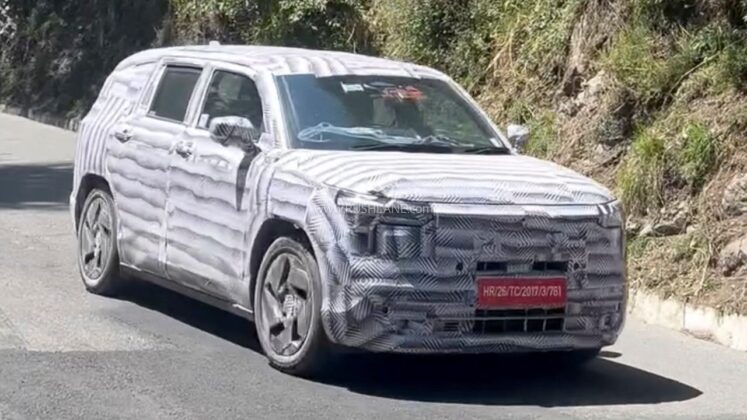
Maruti currently has multiple popular SUVs such as Fronx, Victoris, Brezza and Grand Vitara. With the SUV segment consistently registering strong growth, Maruti has plans to further expand its SUV portfolio over the next 5 to 6 years. The new SUVs will include both facelifts and entirely new models.

Maruti recently launched the with updated powertrain options. Among the upcoming new Maruti SUVs, one of the notable projects is a new sub-4-meter SUV that will directly challenge Tata Punch. Reports claim that this new SUV was Maruti will also be introducing facelift versions of existing SUVs such as Fronx and Jimny.
Maruti’s new SUVs will cover different segments and will be available with a variety of powertrain options. The company already dominates the CNG segment and its NEVs like Victoris, eVitara and Grand Vitara have been registering strong sales. These options, along with other sustainable fuels such as and flex-fuel, will help increase choices available to consumers.
Focus on small cars, exports, capacity expansion
Maruti is looking at small cars as one of its major growth drivers. In the annual report, Maruti Suzuki Chairman RC Bhargava has stated that the small car segment is expected to grow at a faster rate in comparison to the growth seen in the last five years. Bhargava mentioned that GST reforms have played a key role in boosting demand for small cars in India.
In Maruti’s 3 million annual sales target, small cars will be a major contributor. Monthly sales data reveals that Maruti’s entry-level cars such as Dzire, Wagon R, Swift and Alto contribute more than 40% to overall sales. Demand for these small cars is expected to be sustained in the future even when there is a growing preference for SUVs. As per Maruti’s estimates, the car industry in India will grow to 6.1 to 6.3 million units by FY 2030-31.

Maruti will also , where it already enjoys a leadership position. Maruti has been the top passenger vehicle exporter for five consecutive years. In FY26, Maruti’s exports were 50% of the total passenger vehicles exported from India. Maruti exports its cars to around 120 global markets. In FY26, Maruti registered record exports of 4.47 lakh vehicles.
To handle the growing demand for its cars across domestic and global markets, Maruti is looking to boost production capacity. In FY 2026-27, the company has already increased production capacity by 500,000 units. This includes 250,000 units at Kharkhoda and another 250,000 units at Hansalpur plant. Maruti is also working on a new greenfield facility with one million units per annum capacity at Khoraj Industrial Estate, Sanand, Gujarat.
