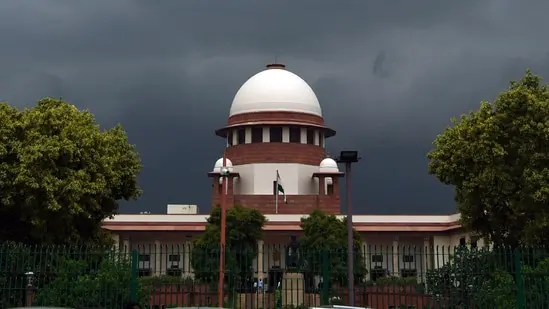
The Supreme Court has directed all states and Union territories (UTs) to immediately register first information reports (FIRs) whenever a person goes missing, irrespective of age or gender, expressing “shock” that some states were under the impression that its earlier direction applied only to missing children.
A bench of justices Ahsanuddin Amanullah and R Mahadevan termed the interpretation a “deliberate and mala fide bogey” and held that chief secretaries and directors general of police (DGPs) of states and UTs found to have failed to comply with its May 22 order would face contempt proceedings and be required to remain personally present before the court to explain the lapses.
“We are shocked to learn that some of the States are under the impression that the expression ‘person’ refers only to children and does not include adults. We find this to be a deliberate and mala fide bogey raised by such states,” the bench said in its August 5 order, released on Monday.
Making it clear that there was no ambiguity in its earlier direction, the bench said: “The language of our earlier order is clear and unambiguous. The expression ‘person’ means every person, irrespective of age or gender.”
The court further directed that if any state or UT had failed to comply with the May 22 order “in its true letter and spirit”, contempt notices should be issued to the concerned chief secretary and DGP. The two officers would have to remain personally present and file show-cause affidavits explaining why they should not be proceeded against and punished for their “deliberate defiance and non-compliance” with the court’s orders.
SC’s May 22 order
The latest order came after the bench was informed that its May 22 direction required all states to register an FIR upon receiving information about any missing person. The court had, in that order, expressly directed every police station to immediately register an FIR the moment information was received about “any person missing”, without waiting for a preliminary inquiry or asking the family to first search for the missing person.
The May 22 order had also left little room for such an interpretation: it specifically said that the FIR must incorporate the provisions of the Bharatiya Nyaya Sanhita relating to kidnapping, abduction or trafficking of a “person or child”.
The Supreme Court’s directions were issued as part of an ongoing exercise to put in place a coordinated, pan-India mechanism to deal with missing persons, human trafficking and the recovery and restoration of victims.
The court had emphasised that the first few hours after a person goes missing are the “golden hours” during which the chances of safe recovery are at their maximum. It therefore directed police not to wait for 24 hours before activating the machinery for tracing a missing person. Even where a person was traced and restored to the family within 24 hours, the police were required to act immediately.
The May 22 order had also directed that where police had sufficient reason to believe that a missing-person case involved trafficking, it should be transferred to a specialised unit without waiting for the expiry of the four-month period. It further ordered the Centre and all states and UTs to make their anti-human trafficking units fully functional and operational within four weeks.
Coordinated mechanism to handle trafficking
The court has now also found several states and UTs to be prima facie in contempt for failing to file affidavits despite its earlier directions. It directed contempt notices to the chief secretaries and DGPs of all states and UTs which had failed to file the required affidavits.
The court, meanwhile, recorded “substantial progress” in the wider exercise being undertaken by a committee headed by former Delhi high court judge Justice Mukta Gupta. Two zonal consultation meetings have already been held, with the third scheduled for August 8 and three more meetings proposed thereafter.
The committee was constituted to help frame a coordinated mechanism for tackling missing persons and human trafficking. The May 22 order had directed the Union home ministry to establish an all-India grid connecting every police station through a dedicated portal for human trafficking, including missing children and women, and integrate it with Mission Vatsalya and the Crime and Criminal Tracking Network System (CCTNS).
The court on August 5 directed the Union government to communicate its concern to the concerned agencies over integration of the relevant portals and complete the exercise within six weeks. The matter will next be heard on October 5.