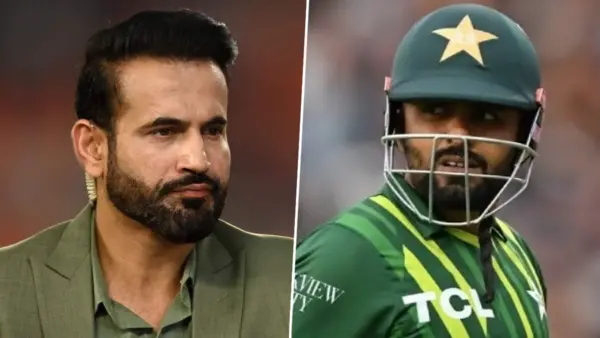
Former Indian cricketer Irfan Pathan has made startling revelations regarding a fake news story propagated by Pakistani media, asserting that a manipulated narrative about him and Pakistani star batter Babar Azam caused him considerable distress.
Pathan disclosed that a story falsely claiming Babar Azam had refused to be interviewed by him, citing Pathan’s alleged criticism of Pakistan, was widely circulated .
Speaking on JioHotstar’s series ‘Cheeky Singles’, Pathan clarified the fabrication behind the viral story. He explained that his face was photoshopped onto an image of a young Bangladeshi reporter who had genuinely been denied an interview at a match. Pathan described the incident as a ‘complete lie’ designed to defame him.
The Origin of the Fake Narrative
The fake story first gained traction around the time of the ODI World Cup 2023, where claims from a Pakistani journalist suggested that Babar Azam had turned down an interview request from Pathan. The journalist, Naseem Rajput, reportedly stated on ‘Kuch Cricket Ho Jaye’ on Aaj TV that Babar refused due to Pathan allegedly ‘speaking against Pakistan.’ However, these claims were swiftly debunked by sports sites like CricTracker, which confirmed that no such incident took place.
Irfan Pathan Addresses Persistent Trolling
Pathan highlighted that such instances of ‘trolling and fake attribution happen every day.’ He recounted the fake story’s widespread impact, stating, ‘It got over a million views, and people believed it was me.’ Despite the constant misinformation, Pathan maintains a policy of not responding to every false narrative. ‘This happens every day, but I don’t respond. Every day, some lie is told in our name or about some player. If you keep responding to everyone, you won’t be able to live your life,’ he remarked.
Even in August 2024, the fake story resurfaced, prompting former Indian spinner Harbhajan Singh to call out a Pakistani fan on X (formerly Twitter) for spreading the misinformation. Pathan himself had advised Harbhajan to ignore such posts, attributing them to individuals seeking ‘reach’ through lies.
This incident underscores the challenges public figures, particularly athletes, face with online misinformation and the persistent efforts required to clarify their positions against baseless claims.