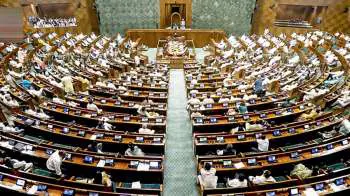
The contentious Foreign Contribution (Regulation) Amendment Bill, 2026, will be taken up for discussion and passage in Parliament on August 12 and will not be implemented retrospectively, Mizoram Chief Minister Lalduhoma said after meeting Union Home Minister Amit Shah, even as the C and allowing proceedings to run to discuss key bills during the ongoing monsoon session.
Lalduhoma, accompanied by a delegation of church leaders from Mizoram, met Shah to convey concerns over the proposed legislation, which seeks to tighten oversight of foreign-funded organisations by creating a powerful designated authority to take control of the assets of NGOs that lose their FCRA licence.
“We have conveyed our apprehensions on the new FCRA bill to the home minister. He assured us that the Bill will not come into effect retrospectively,” Lalduhoma told reporters in the Parliament House complex.
Asked about the timeline for the legislation, the chief minister said Shah informed the delegation that the Bill would be debated in Parliament on August 12. The proposed law was introduced in the Lok Sabha on March 25.
In a memorandum submitted to the home minister, Lalduhoma, Mizoram Kohhran Hruaitu Committee (MKHC) chairman John Raldosanga, and Council of Churches in Mizoram (CCM) general secretary Lalhmangaiha urged the Centre to ensure that the law is applied only prospectively.
They argued that retrospective implementation could create legal uncertainty and expose genuine organisations to penalties for past procedural lapses. The MKHC and CCM represent major church denominations in Mizoram.
What the FCRA Amendment Bill proposes
The Bill seeks to establish a comprehensive framework for the supervision, management and disposal of foreign contributions and assets through a designated authority.
Under the proposed law, the foreign contributions and assets created from such funds of any organisation whose FCRA registration is cancelled, surrendered or allowed to lapse would be provisionally vested in the designated authority from the date of cancellation, surrender or cessation.
If the organisation fails to obtain a fresh registration or restore its licence within the prescribed period, those foreign contributions and assets would be permanently transferred to the designated authority.
Centre renews outreach to end Parliament deadlock
As part of efforts to break the impasse in Parliament, Parliamentary Affairs Minister Kiren Rijiju has reached out to Lok Sabha Leader of the Opposition in Rahul Gandhi to seek support for the proposed Women’s Reservation and Delimitation Bill.
Sources said Rijiju spoke to Gandhi over the phone on Thursday, the second such conversation in recent days, and also met him twice over the past 10 days to discuss the smooth functioning of Parliament.
“I had a productive conversation with Rahul Gandhi. I made a request on a few specific issues and also discussed other matters. We expect continuous communication and coordinated action with the Congress and other opposition parties,” Rijiju told reporters.
According to sources, Gandhi reiterated the Congress’ demand for an all-party meeting on the proposed legislation before extending support. Rijiju, however, did not commit to convening such a meeting.
The government is attempting to build consensus on the proposed constitutional amendment that would operationalise 33 per cent reservation for women in legislatures ahead of the 2029 Lok Sabha elections.
Rijiju said political differences should not come in the way of cooperation in the national interest.
“We may be political opponents, but we are not enemies. Therefore, we should work together in the national interest. However, the impression created outside is that they are determined not to let Parliament function at all; but who ultimately suffers from that?” he said.
Responding to the Opposition’s demand for Amit Shah’s presence in the House, Rijiju said the home minister has been regularly attending Parliament and remains present whenever legislation piloted by him is under discussion.
The government is also consulting NDA allies and other opposition parties, including the Samajwadi Party and the DMK, on the possible reintroduction of the Constitution (131st Amendment) Bill. The proposed legislation seeks to increase the strength of the Lok Sabha from 543 to 816 seats through a delimitation exercise based on the 2011 Census, paving the way for implementing women’s reservation before the 2029 general elections.