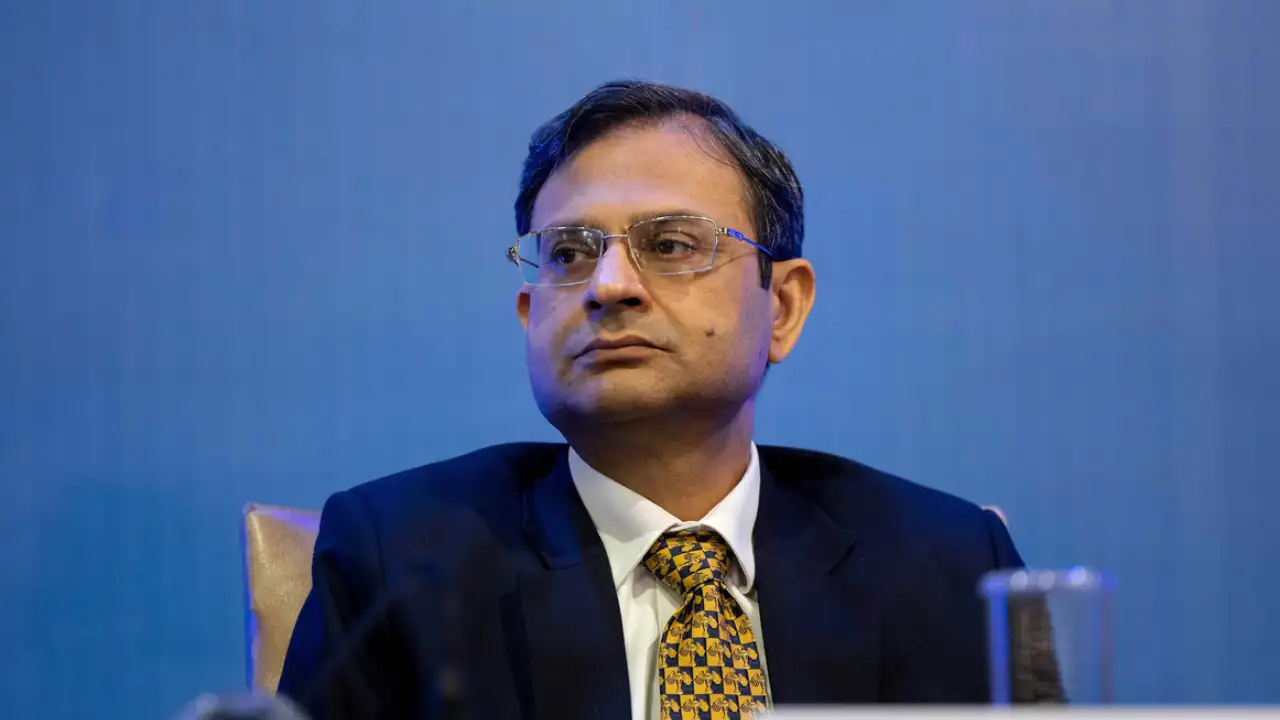
The Reserve Bank of India (RBI) has begun its three-day Monetary Policy Committee (MPC) meeting, with the policy outcome set to be announced on August 5. Market participants and economists are largely expecting the central bank to maintain the benchmark repo rate at 5.25 per cent, as policymakers weigh persistent global uncertainties against domestic economic conditions.
According to a Bloomberg survey, the consensus view is that the from changing interest rates, even as inflation has shown signs of edging higher. While price pressures have increased in recent months, inflation continues to remain within the central bank’s comfort zone, reducing the immediate need for a policy shift.
The RBI has projected average inflation at 5.1 per cent for the current financial year and is expected to retain this forecast in the latest policy review. Economists believe the central bank will continue its cautious approach, prioritising stability amid an uncertain international environment rather than making abrupt policy changes.
At its previous MPC meeting held in June, the RBI kept the repo rate unchanged at 5.25 per cent while retaining its ‘neutral’ policy stance. The Standing Deposit Facility (SDF) rate remained at 5 per cent, whereas the Marginal Standing Facility (MSF) rate and the bank rate were left unchanged at 5.5 per cent.
Commenting on the broader global economic backdrop during the previous policy announcement, RBI Governor Sanjay Malhotra highlighted the challenges facing economies worldwide. “Over the past few months, the global economy has been shaped by heightened uncertainty, disruptions to key trade routes and supply chains, increased market volatility and cautious business sentiment,” he said.
RBI MPC Meeting: Date, Time And Live Streaming Details
The RBI’s bi-monthly Monetary Policy Committee meeting is being held from August 3 to August 5. The central bank will release its policy decision at 10:00 a.m. on August 5, after which RBI Governor Sanjay Malhotra is scheduled to address the media during a press conference at 12:00 p.m.
The Governor’s policy statement will be streamed live on the RBI’s official YouTube channel, allowing investors, businesses and the public to follow the announcement in real time.
Markets Await RBI’s Repo Rate Decision
While the policy rate itself is expected to remain unchanged, analysts believe the Governor’s commentary on inflation, liquidity and future policy direction will be the key takeaway from the meeting.
Ranen Banerjee, Partner and Leader, Economic Advisory, PwC India, noted, “Given that the US Fed is going for a pause, and crude oil prices, while volatile, are still under downward pressure from their highs, there is some breathing room for the MPC. While there is an upward movement in inflation, it is still within the target band. We therefore expect the MPC to wait and watch and go for another pause at this meeting too.”
Shauryam Gupta, CEO, Rupeezy, opined, “We expect RBI MPC to continue to Hold the Repo rate with a Neutral to bullish stance on overall economy, key reason being the growth in GDP domestic economic activity continues to outperform expectations, with GDP growth projected around 6.8 per cent–7.0 per cent, so RBI is not under presure to ease the liquidity in market. Inflation might be slightly an issue with Monsoon distribution which might impact the Food price volatility clubbed with Geo political risk on Crude prices, RBI remains fully committed to headline inflation durably aligns with its 4 per cent target.”
“Breathing space comes from fact that prices have come down from peak levels & this is biggest contributer to India’s import bill & Current Account Deficit. Geopolitical flash point creates an uncertain environment. This encourages RBI, to maintain a data-dependent, cautious policy posture.The big shift is on the rupee. With over $40 billion coming in through the FCNR(B) swap window, the RBI can manage currency pressure using these buffers instead of the repo rate. Simply put: rates will handle inflation, and reserves will handle the rupee volatility,” he added.