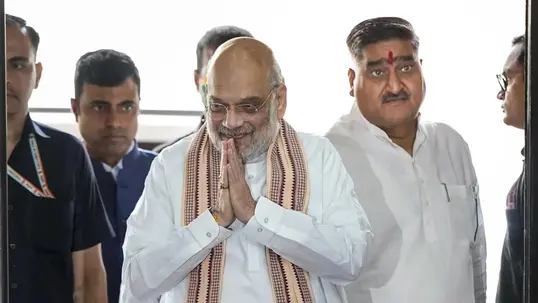
According to the Ministry of Home Affairs, India has brought back 174 fugitives from 36 countries between 2019 and 2026. The feat has been credited to the ministry’s “mission mode” under Home Minister Amit Shah.
The Centre took a swipe at the previous Congress-led governments for their “lack of political will.”
According to the MHA release, the fugitives were wanted across crime categories such us 62 murder and violent crime offenders, 53 sexual offenders and POSCO fugitives, 42 gangster networks and organised crime handlers, 17 terrorism and narco-terror fugitives and 9 financial fraud criminals.
The release said, the number of extradited criminals rose sharply in the recent years, from single digits annually before 2021 to 70 in 2025 and 45 more by July 2026.
The ministry said pre-2014 extradition mechanisms were outdated, with treaties covering only 37 countries and an average of just four extraditions a year between 2004 and 2013, while 110 requests remained pending. It said “previous governments lacked the political will” to pursue fugitives.
Key measures cited include the 2019 NIA and UAPA amendment Acts; the 2024 criminal law overhaul, which introduced provisions under Sections 355 and 356 of the Bharatiya Nagarik Suraksha Sanhita allowing trials in absentia for the first time; and stricter Prevention of Money Laundering Act enforcement, which the ministry said led to attachment of assets worth Rs 17,874 crore and restitution of Rs 18,762 crore between 2019 and 2026.
Under “Operation Trishul,” agencies used satellite inputs, surveillance and digital footprint analysis to geo-locate fugitives who had changed identities abroad, it said.
The ministry cited the extradition of 26/11 accused Tahawwur Rana from the US as a marquee case, and said a Standing Focus Group was set up under the Intelligence Bureau’s Multi Agency Centre in January 2026 to standardise fugitive dossiers and coordinate follow-up with foreign partners.