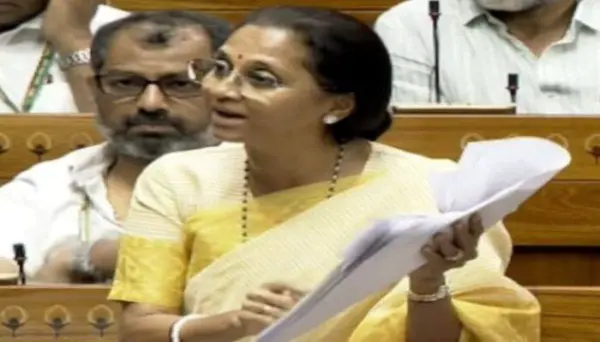
New Delhi: The Lok Sabha is debating the Public Examinations (Prevention of Unfair Means) Amendment Bill, which proposes tougher punishment for examination fraud.
While Opposition MPs have submitted 93 amendments, the governments numbers in the House make their passage unlikely.
Opposition MPs have sought amendments in areas ranging from investigation powers to protection for whistleblowers. The anti-paper leak bill proposes stricter punishment, higher fines and faster trials through dedicated fast-track courts.
When the proposed legislation was introduced in the Lok Sabha on Monday (July 27), Speaker Om Birla gave MPs three hours to submit amendments if they wanted changes to be considered during the debate.
After this, the Lok Sabha Secretariat received 93 amendment proposals from Opposition members.
What changes does the Opposition want?
Several Opposition MPs seek changes in areas including the role of state governments, the probe process and protection for whistleblowers.
Revolutionary Socialist Party (RSP) MP N K Premachandran from Kerala has proposed that state governments should also have the power to form Special Investigation Teams (SITs) to probe paper leak cases. The amendment moved by him argues that states should have a role in investigations.
Trinamool Congress (TMC) MP Saugata Roy has suggested that probes into paper leak cases should take place under the supervision of the Supreme Court.
Congress MP Dean Kuriakose from Kerala has proposed adding provisions to protect whistleblowers who provide information about exam irregularities. The amendment seeks safeguards for people who expose such cases.
Samajwadi Party (SP) MP Neeraj Maurya has suggested that investigations should be completed within 90 days instead of the two-month timeline mentioned in the proposed law.
Why are these amendments unlikely to become part of the law
Submitting amendments in Parliament does not mean they will automatically become part of the legislation. MPs from both the ruling side and the Opposition have the right to suggest changes, but only those amendments accepted by the government and approved through voting become part of the final law.
The proposed legislation itself is an amendment bill, which seeks changes to the existing law on preventing unfair practices in public examinations.
When the Lok Sabha reaches the voting stage, Opposition MPs can move their amendments one by one. Each amendment will be put to vote, but the numbers in the House are likely to decide the outcome. The ruling Bharatiya Janata Party (BJP)-led National Democratic Alliance (NDA) has a majority in the Lok Sabha, making it difficult for Opposition amendments to secure enough support.
In parliamentary practice, Opposition parties also do not always push every submitted amendment to a vote. Usually, one or two members from each party formally move selected amendments during voting, while others may not be taken up.
The governments priority is to pass the amendment bill with its proposed changes to strengthen action against organised exam fraud. The Oppositions amendments will allow members to put forward their concerns and suggestions during the debate, but the final shape of the law will depend on the votes in the House.
The bill comes after repeated controversies over paper leaks in competitive examinations, which have affected students preparing for major entrance and recruitment tests. The government has argued that stronger punishment and faster trials are needed to prevent organised groups from exploiting the examination system.