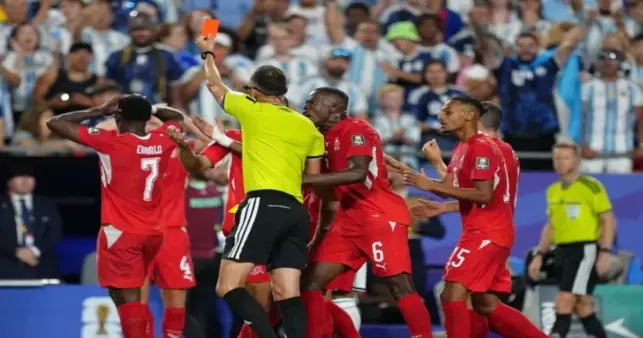
Football’s rule-making body, the International Football Association Board (IFAB), has clarified its Video Assistant Referee (VAR) guidelines after ruling that Switzerland forward Breel Embolo should not have been sent off during the World Cup quarterfinal against Argentina.
The clarification came after a review of VAR protocols, with IFAB confirming that the incident involving Embolo highlighted a misunderstanding over how certain VAR interventions should be used. The organisation said a review of the process has been ongoing since March and acknowledged that such cases are part of the broader evaluation.
Embolo was shown a second yellow card in the 72nd minute after a VAR review overturned a foul decision involving Argentina midfielder Leandro Paredes. The dismissal came shortly after Switzerland had equalised at 1-1, changing the course of the match. Argentina eventually won the game 3-1 after extra time, with the red-card decision becoming a major talking point. The decision also led to complaints from some observers, including supporters of previous opponents, who questioned whether refereeing calls were favouring Lionel Messi’s team during the tournament.
According to IFAB, the VAR intervention was not permitted under the current interpretation of the “mistaken identity” protocol. The organisation explained that the rule is designed to correct situations where a referee shows a card to the wrong player who was not responsible for the original offence. In Embolo’s case, the VAR officials determined that Paredes had not committed a foul and that Embolo had simulated contact. However, IFAB clarified that this type of review does not fall under the existing mistaken identity category and should not have been used to issue the second yellow card.
“However, it may not be used as such until that review is concluded,” IFAB said while explaining that potential changes to the protocol would only come after the ongoing assessment is completed. The incident has renewed debate over the role of VAR and the extent to which video officials should intervene in subjective decisions. While VAR was introduced to reduce major errors in football, critics have often raised concerns about inconsistent interpretations and the impact of reviews on match outcomes.
IFAB’s review is expected to examine how VAR can be used more effectively, including when officials should intervene and how decisions involving player conduct, simulation and disciplinary actions should be handled. The clarification regarding Embolo’s dismissal is likely to influence future discussions about VAR improvements as football authorities continue efforts to make refereeing decisions more consistent and transparent across international competitions.