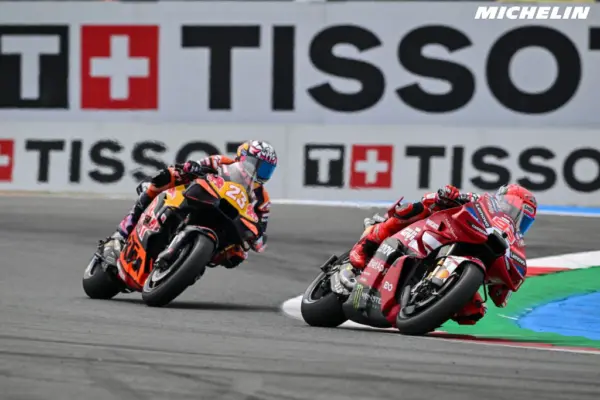
Marc Marquez Defies Physical Limits: Chasing Glory at Only 80% Fitness
Marc Marquez’s 2026 MotoGP campaign has taken a dramatic turn, with the Spanish superstar mounting a stunning title challenge despite never regaining full physical fitness.
Trailing the lead by just 18 points after clawing back an astonishing 101-point deficit in a handful of Grands Prix, Marquez’s relentless charge has sent shockwaves through the paddock and left rivals questioning what more he is capable of.
The season began under a cloud for Marquez, who underwent right shoulder ligament surgery during the winter break. Complications soon followed: a loosened screw compressed his radial nerve, severely disrupting his off-season preparation. The impact was immediate-an uncharacteristically inconsistent start to the year, with performances well below the nine-time world champion’s formidable standards.
A subsequent corrective surgery brought some relief, yet Marquez was unable to resume normal training for months. Ducati team manager Davide Tardozzi had already warned that Marquez was unlikely to regain peak condition before September. Italian journalist Giovanni Zamagni pushed the concern further, stating on his YouTube channel, “Unfortunately, Marquez may never fully recover. I’ve been told he still struggles within the team and is not physically ready yet.”
Crucially, these are not injuries that prevent Marquez from racing, but rather a lingering inability to return to his benchmark form from 2025. There is no guarantee he will ever reclaim that level. Yet, the real story is the paradox of 2026: while some in the paddock credit Marquez’s resurgence to rivals’ mistakes, this narrative ignores the extraordinary feat of a physically compromised rider winning at the highest level.
Since returning from absences at Le Mans and Barcelona, Marquez has dominated, claiming victory in three of the last four Grands Prix-including a commanding display at the Sachsenring. Such performances are rarely seen from a rider operating below full capacity. Observers estimate Marquez is currently riding at 80 to 90 percent of his potential, a figure that should deeply unsettle his competitors.
The implications are profound. If Marquez can take pole positions, dominate weekends, and rack up victories while still recovering, the question is immediate and urgent: what happens if he ever regains full strength?
Rivals such as Ai Ogura, Jorge Martin, Marco Bezzecchi, and may not even be facing the ultimate version of Marquez. Instead, they are up against a more calculated, efficient, and perhaps even more dangerous competitor. Years of injuries and operations have forced Marquez to evolve. The reckless brilliance of previous seasons has given way to a methodical, mature approach. As Marquez himself now asserts, he aims only to do what is necessary to win, avoiding unnecessary risks while remaining ruthlessly effective.
The burning question is no longer when Marquez will be back to 100 percent, but whether this “new” Marquez-less spectacular, more tactical, and still physically below par-is now the gold standard. If so, the 18-point gap to the leader could soon be rendered meaningless as Marquez continues to rewrite the limits of what is possible in