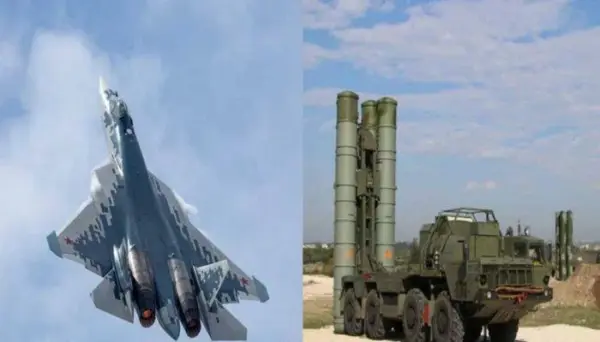
New Delhi: The Indian Air Force (IAF) is looking at a major upgrade to its combat capabilities as it explores options to add a fifth-generation fighter aircraft to its fleet.
While the US-made F-35 is one of the aircraft being considered, delays and other challenges surrounding its acquisition have kept Russias Su-57 stealth fighter under consideration as a possible alternative.
If India decides to bring the Su-57 into service, its integration with the S-400 Triumf air defence system, which is operated by the IAF, could create a networked air combat system built around real-time data sharing, according to defence analysts. Such an arrangement would combine a long-range ground-based missile system with a stealth fighter capable of operating in contested airspace.
The idea behind this approach is not only adding another fighter jet but creating a connected battlefield network where sensors, aircraft and weapons systems work together to detect and respond to threats faster.
Why Su-57, S-400 combination are being considered
Indias air power requirements have become more demanding due to its security environment. The IAF presently operates fewer fighter squadrons than its authorised strength. Modernisation has therefore become its top priority.
The force has inducted aircraft such as the Rafale and continues to develop indigenous platforms, including the Tejas fighter programme. At the same time, India has been exploring options for a fifth-generation fighter to strengthen its capabilities in future air combat scenarios.
The Su-57, Russias fifth-generation stealth fighter, has emerged as one of the options along with the American F-35. While no final decision has been taken, supporters of the Russian aircraft highlight the possibility of integrating it with systems in Indias inventory.
At present, the country operates the S-400 Triumf air defence system, which provides long-range detection and interception capability against aircraft, missiles and other aerial threats.
How the proposed network could work
A possible Su-57-S-400 combination would depend on sensor sharing. The S-400s powerful surveillance radars could detect and track aerial targets over long distances, while information from the ground-based system could potentially be shared with fighter aircraft.
The S-400s 96L6E surveillance radar is designed to track different types of airborne targets, including aircraft and missiles. Its data-sharing capability could allow fighter aircraft to receive information about threats before activating their own sensors.
A stealth aircraft like the Su-57 could gain an operational advantage from such a system. Rather than relying constantly on its own radar, which can reveal its position, the fighter could use information from external sensors to move closer to a target before activating its own systems when required.
The Su-57 is equipped with Russias N036 Belka AESA radar system, which includes multiple radar arrays placed across the aircraft. These sensors provide the fighter with a broad view of the surrounding airspace and the ability to track multiple targets.
Indias move towards network-centric warfare
The way air battles are fought is rapidly changing. Modern forces are no longer depending only on individual aircraft or weapons systems operating on their own. Instead, they are connecting fighters, radars, satellites and missile systems so that information can move fast between different platforms.
Countries around the world are building such sensor networks to get a better understanding of what is happening in the air and respond faster to emerging threats.
A network combining long-range air defence systems with advanced fighters could improve the IAFs situational awareness and reduce blind spots in surveillance.
Such a system could also help India prepare for future challenges involving advanced fighter aircraft, electronic warfare and missile threats. If a fighter gets information from ground-based sensors before entering a combat situation, it can assess the threat faster and take action with better awareness. The final course of Indias fifth-generation fighter plans will depend on factors such as technology transfer, operational needs, cost and long-term defence priorities.
Indias air power modernisation is now moving beyond simply adding new aircraft to the fleet. The aim is to create a connected combat system where fighter jets, air defence units and surveillance networks can work together during operations.